India's luxury car market has entered a new phase of growth in 2026. The segment recorded a surge of around 10 percent driven by rising wealth, younger buyers, and a rapid shift toward electric vehicles. According to industry research, the market was valued at USD 1.58 billion in 2026 and is projected to reach USD 3.15 billion by 2034 at a compound annual growth rate of 8.98 percent. Luxury vehicles still account for just over one percent of total passenger car sales in India, which signals significant headroom for expansion.
The number of high-net-worth individuals continues to rise. India now hosts 8.71 lakh millionaire households, a 90 percent increase since 2021. There are 13,600 ultra-high-net-worth individuals, and nearly 20 percent of the wealthy base is under 40 years old. This younger cohort prefers technology-led, experience-driven luxury over traditional brand loyalty. Senior professionals and startup founders now form a larger share of buyers than five years ago. BMW India reports that approximately 30 percent of its sales come from this group.
Market Structure and Vehicle Preferences
SUVs dominate the luxury landscape with a 52 percent market share, growing at 6.8 percent annually. India's mixed road conditions and consumer preference for commanding road presence make SUVs the default choice. Sedans hold 28.5 percent share, supported by corporate fleet demand and chauffeur-driven executive segments. The "Others" category, which includes luxury MPVs like the Lexus LM, is the fastest-growing sub-segment at 7.4 percent CAGR, driven by multi-generational family travel preferences.
The price bracket of INR 50 to 80 lakh accounted for 40.87 percent of luxury car sales in 2025 and is rising at a 10.36 percent CAGR. The top-end segment above INR 1.5 crore registered 16 percent year-on-year growth in FY2026, contributing disproportionately to revenue despite modest volumes.
Mercedes-Benz and BMW Lead the Pack
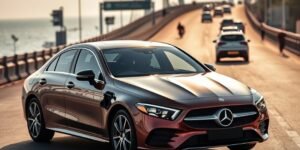
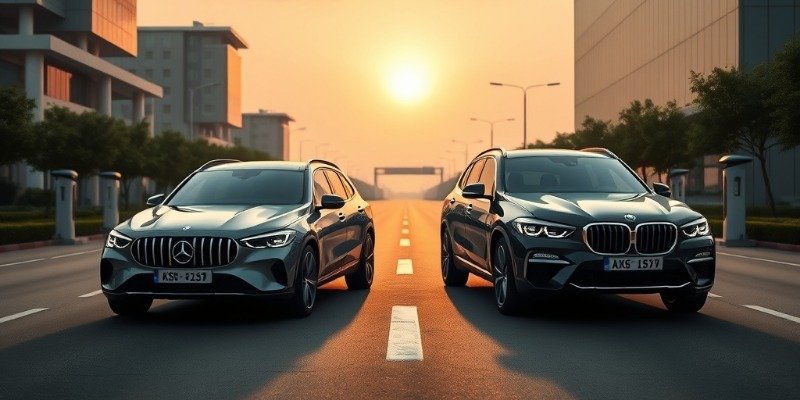
The German triumvirate of Mercedes-Benz, BMW, and Audi collectively held approximately 85 percent of luxury vehicle sales in calendar year 2025. Mercedes-Benz led with 18,026 units, followed closely by BMW at 17,271 units. BMW recorded its highest-ever first-nine-month sales in 2025 at 11,978 vehicles, reflecting a 13 percent year-on-year increase. Jaguar Land Rover completed the top three with 5,792 units.
In the first half of 2026, both brands posted record numbers. Mercedes-Benz India retailed 9,768 units, a 9 percent year-on-year growth. BMW Group India delivered 9,075 units, a spectacular 17 percent year-on-year growth. Their strategies differ. Mercedes focused on top-end vehicles including AMG and Maybach sub-brands, which commanded a historic 28 percent share of its total sales. The AMG division alone posted 50 percent growth in H1 2026. BMW leveraged its Sports Activity Vehicle portfolio and long-wheelbase sedans. BMW's LWB sedans, anchored by the 3 Series Gran Limousine and 7 Series, accounted for 52 percent of its sedan portfolio at 4,428 units. BMW's SAV portfolio, led by the locally assembled X1, X5, and X7, registered a 35 percent volume increase at 5,926 units.
Electric Vehicles: The New Growth Engine
A counter-intuitive dynamic is reshaping the market. EV penetration in the luxury segment stands at 10 to 11 percent, nearly three times the 4 percent rate in the mass market. Luxury EV sales surged 66 percent year-on-year to 2,027 units in the first five months of 2025. The electric sub-segment is projected to grow at 21.9 percent CAGR through 2034, far outpacing the overall market.
BMW has established a commanding lead in luxury EVs. In FY2026 (April 2025 to March 2026), BMW sold 3,537 luxury EVs, capturing over 65 percent of the segment. The BMW iX1 Long Wheelbase alone accounted for approximately 3,200 units. Priced from Rs 49 lakh, the iX1 LWB was developed specifically for India and China. Its long wheelbase adds 110 mm of rear legroom, critical in a market where nearly 40 percent of luxury buyers employ drivers. BMW claims over 440 km WLTP range, translating to 350-380 km in real-world conditions. BMW's dealer network includes 25-plus EV-ready dealerships with DC fast chargers, and the company covers home charging installation costs.
Mercedes-Benz sold 1,047 luxury EVs in FY2026, down 10 percent from the previous year. Its EV lineup is skewed toward high-end models like the EQS SUV, with around 20 percent of EV sales coming from top-tier offerings priced above Rs 1.4 crore. However, Mercedes is preparing a counter-punch with the CLA Electric, launching at Rs 55-59 lakh with a claimed 792 km WLTP range. Mercedes-Benz's BEV portfolio grew 85 percent in FY2025-26, with the locally assembled EQS SUV emerging as its bestselling electric model. By Q2 2026, Mercedes doubled its EV sales mix to 14 percent of total volume.
Audi's EV performance collapsed 87 percent to just 17 units in FY2026 after discontinuing the e-tron and Q8 e-tron without immediate replacements. The Q6 e-tron is expected in late 2026 or early 2027. Tesla entered India in July 2025 as a fully imported CBU player. While near-term volumes are limited by duty levels, its brand credibility has accelerated luxury EV purchase consideration among younger buyers aged 25-40.
State-level incentives are compounding the momentum. Karnataka waives road tax and registration fees amounting to INR 8-12 lakh on INR 1 crore luxury EVs. Tamil Nadu provides a 100 percent state GST refund for five years on locally assembled EVs. National guidelines require a 150 kW DC public charger every 100 km on inter-city corridors, with 1,200 stations live by December 2025. The GST Council reduced effective rates on automobiles from up to 50 percent to 40 percent effective September 22, 2025, and strong hybrid rates were cut to 38 percent.
Regional Dynamics and Emerging Markets
West India leads with approximately 33 percent market share, driven by financial services wealth in Mumbai and startup ESOP-driven buyer activity. North India follows at 29-30 percent, anchored by Delhi NCR's high concentration of HNIs and corporate executives. South India is the fastest-growing region at a projected 11.27 percent CAGR through 2031, powered by tech-sector wealth in Bengaluru and Hyderabad, generous EV incentives, and the densest fast-charger network outside the Delhi-Mumbai corridor. East India remains the smallest share, concentrated in traditional business families and expanding petrochemical and IT wealth.
A notable shift is the rise of Tier-2 wealth hubs. Cities like Varanasi, Surat, Ludhiana, and Kochi are registering double-digit luxury vehicle adoption rates, driven by industrial expansion and agro-wealth. Both Mercedes-Benz and BMW are aggressively expanding their physical footprints into these emerging markets.
Challenges and Future Outlook
Despite strong demand tailwinds, the market faces persistent headwinds. The luxury segment remains among the most heavily taxed globally, with combined central and state levies substantially inflating on-road prices. Foreign exchange volatility adds pricing unpredictability, as most luxury vehicles are either fully imported or rely on imported components for CKD assembly. Managing directors at Volvo Car India and BMW India have acknowledged potential selective price adjustments in 2026 due to forex movements.
Looking ahead, the convergence of luxury electrification and AI-embedded vehicle experiences will be the most differentiated growth vector through 2034. OEM investments in over-the-air software upgrade platforms, AI-powered predictive maintenance, and subscription-based premium services will shift revenue from one-time transactions to recurring digital services. As domestic BEV assembly capacity scales — BMW has committed to local BEV assembly by 2026, and Audi's Aurangabad plant will accommodate BEV platforms by late 2026 — the structural cost barrier of CBU import duties will diminish, broadening the addressable market into lower luxury price bands and accelerating Tier-2 city penetration.
The total luxury EV market reached 5,404 units in FY2026, a 61 percent jump from the previous year. While this remains under 0.5 percent of India's total EV sales of over 1.2 million units, luxury EVs accounted for roughly 11-12 percent of luxury car sales, a meaningful penetration rate expected to grow rapidly. AMP Energy launched India's first premium EV subscription service in the National Capital Region in October 2025, offering fleet-on-demand access to BMW iX, Mercedes EQS, and Audi e-tron, introducing a new non-ownership revenue model that could account for 5-8 percent of luxury EV access in metro markets by 2027.
India's luxury car market has entered a new era of maturity. Whether the next acquisition is a track-focused AMG, a chauffeured long-wheelbase limousine, or a silent zero-emissions luxury EV, the market now offers highly sophisticated products tailored to Indian roads and fiscal realities.
FAQs
What was the size of India's luxury car market in 2026
The India luxury car market was valued at USD 1.58 billion in 2026 and is projected to reach USD 3.15 billion by 2034 at a CAGR of 8.98 percent.
Which brands lead the luxury EV segment in India
BMW leads the luxury EV segment with 3,537 units sold in FY2026, capturing over 65 percent market share. The BMW iX1 LWB accounted for approximately 3,200 of those units. Mercedes-Benz sold 1,047 luxury EVs in the same period.
What is driving the growth of luxury cars in India
Growth is driven by a rapidly expanding base of high-net-worth individuals, younger affluent buyers under 40, localized assembly reducing acquisition costs, and accelerating luxury EV adoption supported by state incentives and charging infrastructure.
Which region is growing fastest for luxury cars in India
South India is the fastest-growing region at a projected 11.27 percent CAGR through 2031, powered by tech-sector wealth in Bengaluru and Hyderabad, generous EV incentives, and dense charging infrastructure.
What are the main challenges for the luxury car market in India
The main challenges include elevated taxation with combined levies inflating on-road prices, foreign exchange volatility affecting import costs, and limited non-metro charging infrastructure constraining EV adoption beyond major cities.