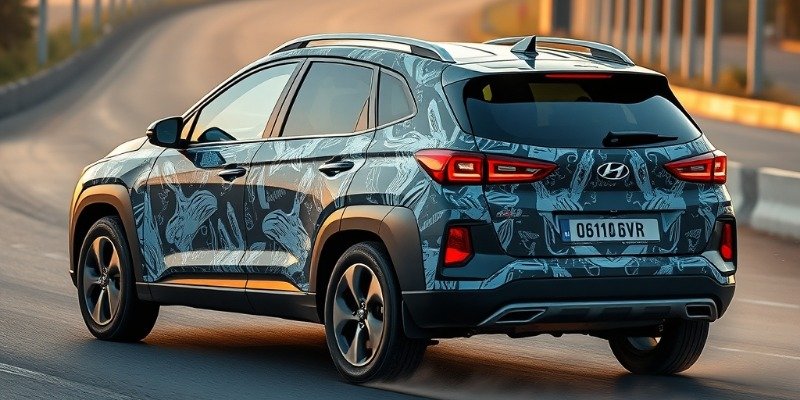
Hyundai has officially confirmed a new compact electric SUV for the Indian market as part of its expanding product offensive. Codenamed HE1i and expected to carry the Ioniq 1 nameplate, this electric vehicle is targeting a debut in January 2027. The announcement comes from a detailed report published on October 23, 2026, which outlines the brand's strategy to fill a critical gap in its electric lineup below the Creta Electric.
The upcoming Ioniq 1 will compete in the B2-segment electric SUV category, a space currently dominated by the Tata Nexon EV, Mahindra XUV 3XO EV, and the recently launched Kia Syros EV. Hyundai currently lacks an electric offering in this price bracket, making the Ioniq 1 a crucial volume driver for the brand's electrification goals in India. The model is expected to sit alongside the Hyundai Bayon, which launches on October 26, 2026, and the next-generation Creta scheduled for March 2027, giving the company a comprehensive SUV portfolio across different price points.
Design and Dimensions
Early test mules reveal a tall, boxy silhouette with short front and rear overhangs and a relatively long wheelbase. The design prioritizes cabin space within a compact footprint. Estimates suggest a wheelbase exceeding 2,500mm and ground clearance of approximately 190mm. Overall dimensions are expected to be comparable to the Venue and Syros, though the dedicated electric architecture should allow more passenger room.
The styling draws inspiration from Hyundai's global Inster EV but appears larger with a more pronounced SUV stance. Key exterior elements include separate upper and lower lighting units with LED daytime running lights positioned above a closed front fascia. Main headlamps sit lower on the bumper with pixel-style lighting elements. Prominent black cladding, roof rails, a level roof line, and a near-vertical tailgate complete the utilitarian look.
Expected Features and Technology
Hyundai has already confirmed a next-generation infotainment system and Level 2 advanced driver assistance systems (ADAS) for the Ioniq 1. Next-generation connected car technology will be available across all variants, though specific functions and ADAS variant availability remain undisclosed.
Based on segment benchmarks, the equipment list is expected to include a 10.25-inch touchscreen paired with a 10.25-inch digital instrument cluster, wireless Android Auto and Apple CarPlay, automatic climate control, ventilated front seats, a panoramic sunroof, a 360-degree camera system, and vehicle-to-load (V2L) functionality. Safety equipment should feature six airbags, electronic stability control, tyre pressure monitoring, and a blind-view monitor. Driver assistance functions may include adaptive cruise control, automatic emergency braking, and lane-keeping assistance.
Battery, Range, and Charging
The Ioniq 1 is reportedly planned with Standard Range and Long Range battery options. For the initial launch, Hyundai will source battery cells from Svolt to avoid delays, with a planned transition to locally produced cells through its partnership with Exide Industries at a later stage.
The global Inster EV offers 42kWh and 49kWh battery packs, and a similar strategy is expected for India to address different budget and range requirements. The vehicle will support DC fast charging, with an estimated 10 to 80 percent recharge time of around 30 minutes.
Market Positioning and Significance
This compact EV represents more than just another model addition. Its smaller footprint and expected competitive positioning could make it Hyundai's highest-volume electric model in India. The Bayon and next-generation Creta will address customers shopping higher in the range, while the Ioniq 1 targets buyers who find the Creta Electric too large or expensive. With the Indian EV market growing rapidly in the sub-20 lakh segment, timely execution of this launch will be critical for Hyundai's market share aspirations.
FAQs
When is the Hyundai Ioniq 1 expected to debut in India?
The Hyundai Ioniq 1 is targeting a debut in January 2027 according to the latest reports.
What segment will the Ioniq 1 compete in?
The Ioniq 1 will compete in the B2-segment electric SUV category, slotting below the Creta Electric.
Who are the main rivals for the Hyundai Ioniq 1?
Key rivals include the Tata Nexon EV, Mahindra XUV 3XO EV, and Kia Syros EV.
What battery options are expected for the Ioniq 1?
Standard Range and Long Range versions are planned, likely using 42kWh and 49kWh battery packs similar to the global Inster EV.
Will the Ioniq 1 get ADAS features?
Yes, Hyundai has confirmed Level 2 ADAS for the upcoming EV, though variant-specific availability has not been detailed yet.