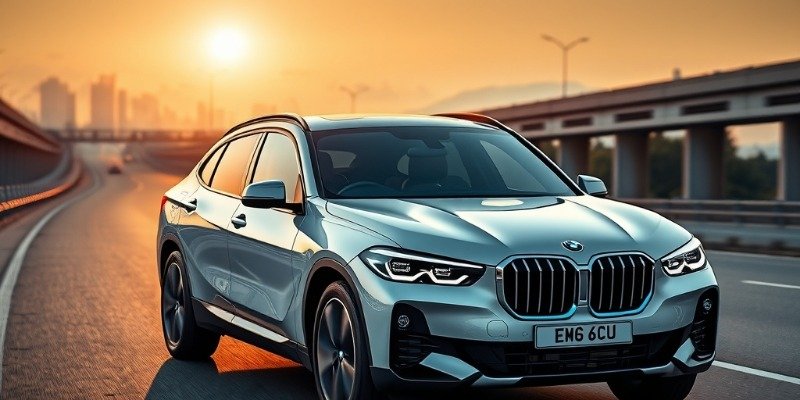
BMW Group India has announced another price increase for its vehicles, marking the third upward revision in the 2026 calendar year. Effective July 1, 2026, prices across the BMW and MINI portfolio will rise by up to 2 percent. The decision reflects ongoing pressure from a weakening rupee, higher logistics expenses, and elevated material costs that continue to affect luxury carmakers operating in India.
The latest adjustment applies to both locally assembled models and completely built-up units imported into the country. BMW's locally produced line-up includes the 2 Series Gran Coupe, 3 Series Long Wheelbase, 5 Series Long Wheelbase, 7 Series, X1, X3, X5, X7, M340i, and the iX1 Long Wheelbase. On the CBU side, models such as the i5 M60, i7, i7 M70, iX, M440i Convertible, M2 Coupe, M4 Competition, M5, and XM will also see revised pricing. The MINI range covering the Countryman Electric, Cooper, Cooper Convertible, and JCW Countryman All4 is included as well. The company is also preparing to launch the new MINI Countryman C on June 17.
Why the Rupee Matters for Luxury Cars
Currency movement plays a disproportionate role in the luxury segment. Even when vehicles are assembled in India, a significant portion of high-value components, powertrain parts, electronics, and specialised systems are imported. For completely built-up units, the entire vehicle cost is exposed to exchange-rate fluctuations. The euro has moved from around ₹105 at the start of the year to above ₹110, increasing the landed cost for European brands like BMW and Mercedes-Benz. This makes periodic price revisions nearly unavoidable unless manufacturers absorb the hit on margins.
BMW Group India President and CEO Hardeep Singh Brar stated that the adjustment is necessary to protect the brand's premium standards amid macroeconomic headwinds. He emphasized that the increase ensures uninterrupted delivery of the engineering, technology, and service experience expected by BMW customers in India.
Industry-Wide Trend
BMW is not alone in facing this challenge. Mercedes-Benz India has also implemented two price hikes this year and has signaled further revisions may be needed if the rupee continues to weaken. The issue is structural across the premium and luxury segments, where imported parts, CBUs, higher logistics expenses, and global supply chain disruptions are pushing up operating costs.
Impact on Buyers
For customers, the July revision means a potential 2 percent increase on ex-showroom prices depending on the model and variant. The impact is more pronounced on higher-priced vehicles. A 2 percent rise on a ₹1 crore model translates to roughly ₹2 lakh before taxes and on-road charges. This could prompt some buyers to advance their purchase decisions before the new prices take effect. However, demand in the luxury segment has remained relatively resilient, supported by rising incomes, expanding premium consumption, and growing interest in electric luxury vehicles.
BMW India Financial Services will continue to offer financing solutions aimed at easing the impact, including attractive monthly instalments, reduced interest rates for select models, assured buy-back options, and flexible end-of-term opportunities.
BMW's Growth Momentum Continues
Despite repeated price increases, BMW India continues to see strong demand. The company has benefited from a robust SUV and EV portfolio. Its electric vehicle range, led by models such as the iX1 Long Wheelbase, iX, i5, and i7, has helped the brand strengthen its position in the luxury EV space. BMW has been the number one luxury EV brand in India since 2022, with EV sales growing significantly year over year.
The ability to pass on cost increases reflects the strength of demand at the upper end of the market. Unlike mass-market cars where price sensitivity is very high, luxury vehicle buyers are often more willing to absorb incremental increases if the brand value, product experience, and ownership package remain strong.
What This Means for the Market
The third price hike in six months underscores how currency depreciation is becoming a major challenge for luxury carmakers in India. While the Indian luxury car market is growing, brands remain heavily exposed to global cost structures, imported components, and exchange-rate movements. The latest revision is unlikely to severely dent BMW's demand in the short term, given the brand's strong pull in SUVs, performance cars, and luxury EVs. However, repeated increases could make entry-level luxury models more expensive and widen the gap between premium mass-market cars and German luxury vehicles.
For buyers already considering a BMW or MINI, June 2026 presents a window to finalize purchases before the July revision takes effect. For the industry, the signal is clear: if the rupee remains weak, luxury car prices in India may continue to move upward through the year.
FAQs
When does the new BMW price hike take effect?
The price increase of up to 2 percent across the BMW and MINI range takes effect from July 1, 2026.
Which models are affected by the price increase?
The hike applies to the entire portfolio including locally assembled models like the 3 Series Long Wheelbase, 5 Series Long Wheelbase, X1, X3, X5, X7, and iX1 Long Wheelbase, as well as CBU models such as the i7, iX, M4 Competition, M5, XM, and the MINI range including Countryman Electric and Cooper variants.
Why is BMW increasing prices again this year?
The company cites rupee depreciation against the euro, rising logistics costs, and higher material costs as the primary reasons. This is the third price revision in 2026 following similar increases earlier in the year.
How much more will a BMW cost after the hike?
The increase is up to 2 percent on ex-showroom prices. On a vehicle priced at ₹1 crore, this translates to approximately ₹2 lakh additional cost before taxes and on-road charges, with the exact amount varying by model and variant.
Are other luxury brands also raising prices?
Yes, Mercedes-Benz India has also implemented two price hikes in 2026 and indicated further revisions may be necessary if the rupee continues to weaken, making this an industry-wide trend in the luxury segment.