India's passenger vehicle market entered a new phase in September 2025 when the government rolled out GST 2.0. The reform simplified the tax structure into three slabs of 5%, 18%, and 40%. For buyers of small petrol, diesel, and CNG cars under four metres, the effective GST dropped sharply from 29-31% to 18%. Larger vehicles, including mid-size cars and SUVs, now fall under a flat 40% rate. Electric vehicles continue to enjoy a preferential 5% GST, while auto components are standardised at 18%.
The impact was immediate. In the fourth quarter of 2025, passenger vehicle sales hit 1.3 million units, a 19.3% year-on-year jump. Three consecutive months of double-digit growth followed, with December 2025 alone rising 22.8%. January 2026 kept the momentum with 12.7% growth. Average retail prices, which had peaked at ₹12.52 lakh in July 2025, fell to a low of ₹11.01 lakh by December before settling at ₹11.53 lakh in January 2026. Dealer incentives also dropped from ₹38,900 in June 2025 to ₹18,709 in January 2026, signalling healthier demand rather than discount-driven sales.
Hatchbacks Show Life But SUVs Lead Volume Growth
Entry hatchbacks secured a 20.2% market share and grew 19.6% in Q4 2025. Maruti Suzuki reported a 35-year single-day sales record of 30,000 units, with 80,000 enquiries and 75,000 bookings in the weeks following the GST announcement. The S-Presso now starts at ₹3.49 lakh, below its 2020 launch price. Maruti expects 10% growth in the small car segment for the coming year, helped by the GST cut, lower EMIs from repo rate reductions, and income tax relief for earners up to ₹12 lakh.
Yet the bigger story remains SUVs. They contributed 55.8% of all incremental volumes in Q4 2025. Sub-four-metre SUVs surged from 331,000 to 416,000 units, a 24% jump. Mid-size SUVs (4-4.5 metres) grew 21% from 181,000 to 220,000 units. Even full-size SUVs rose 6%. The sub-four-metre SUV segment benefited from the same 18% GST rate as hatchbacks, delivering an 11-13% effective price cut that made models like the Tata Punch, Hyundai Exter, and Maruti Fronx far more accessible.
Why Micro SUVs Are Winning Over Hatchbacks
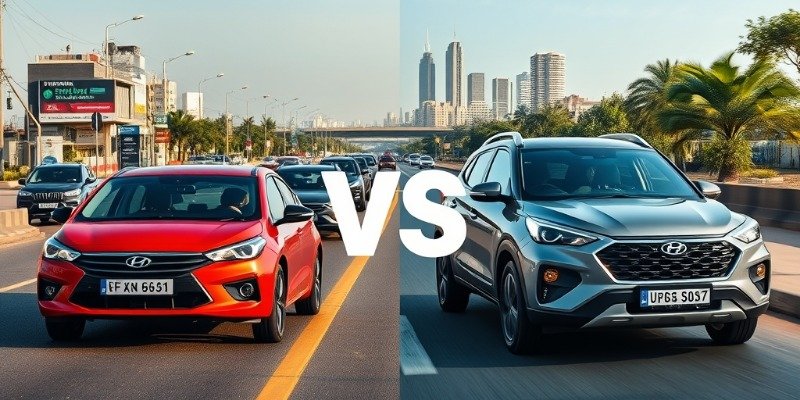
Hyundai Motor India COO Tarun Garg has stated that micro SUVs will grow at the expense of hatchbacks. He points out that models like the Exter and Punch did not exist four years ago. Today, they sell in the ₹6-10 lakh bracket where hatchbacks once dominated. Buyers want SUV styling, higher ground clearance, and features such as sunroofs and six airbags. The GST cut applies equally to these micro SUVs, so the price gap with hatchbacks has narrowed further.
FADA President CS Vigneshwar acknowledges the global trend of "SUVisation" but believes hatchbacks will retain a niche. He notes that multiple manufacturers still offer hatchback models, keeping competition alive. Unlike the mid-size sedan segment, which has been squeezed, the hatchback space sees continued product supply. However, wholesales of entry small cars have fallen over 60% from 3.7 lakh units in FY19 to 1.44 lakh in FY25, while overall passenger vehicle wholesales grew 28.5% to 43.38 lakh units.
Price Reset Is Real But Not Permanent
JATO Dynamics analysis shows the GST reform created a one-time price reset, not a permanently deflationary environment. Average prices bottomed out in November 2025 at ₹11.23 lakh and have since risen. Inflation, upcoming safety norms, and feature additions will push prices up again by late 2026, gradually eroding the initial tax advantage. OEMs are expected to prioritise demand quality over volume, focusing on booking conversion ratios and variant mix to protect margins.
Strategic Shifts For 2026 And Beyond
Automakers are recalibrating portfolios toward compact SUVs, selective hatchbacks, and efficient CNG options. The 18% component GST strengthens localisation incentives, encouraging investment in platforms, hybrid-EV technologies, and resilient supply chains. Compact SUVs under 4.5 metres have emerged as the core profit centre. The narrower tax gap between EVs (5%) and ICE vehicles (18-40%) also boosts the case for hybrids and CNG variants, especially in compact SUVs where running costs matter but EV infrastructure is still developing.
For entry hatchbacks, the GST alignment at 18% opens pockets of growth in Tier-2 and Tier-3 markets. But rising safety and regulatory costs will keep upward pressure on prices. OEMs can refresh existing hatchback lines but should avoid heavy new platform investments, as the long-term shift toward SUVs remains intact.
The GST cut has given hatchbacks a lifeline and made car ownership more accessible for two-wheeler upgraders. But the SUV wave, led by micro SUVs priced close to hatchbacks, shows no sign of slowing. The segment that adapts best to changing aspirations while managing cost structures will define the next phase of India's automotive growth.
FAQs
How much did GST fall for small cars in September 2025?
The GST on small petrol, diesel, and CNG cars under four metres dropped from 29-31% to a flat 18% under the new GST 2.0 structure.
Did hatchback sales grow after the GST cut?
Yes. Entry hatchbacks grew 19.6% year-on-year in Q4 2025 and held a 20.2% market share, with Maruti Suzuki reporting record single-day sales and a surge in bookings.
Why are micro SUVs growing faster than hatchbacks?
Micro SUVs like the Tata Punch, Hyundai Exter, and Maruti Fronx offer SUV styling, higher ground clearance, and features such as sunroofs and six airbags at prices close to hatchbacks. The same 18% GST rate applies, narrowing the price gap further.
Will hatchbacks disappear from the Indian market?
Industry leaders including FADA President CS Vigneshwar say hatchbacks will continue to exist. Multiple manufacturers still offer hatchback models, and a buyer base prefers the body style for city driving and lower running costs.
Is the price drop from GST permanent?
Analysts say the GST reform created a one-time price reset. Average prices have already started rising from their November 2025 low. Inflation, safety upgrades, and feature additions will push prices up again by late 2026.