General Motors has reported a sharp drop in its electric vehicle sales in the United States during the third quarter of 2026. The company delivered only 25,473 electric vehicles between July and September, which is a steep 61.7% fall compared to the same period last year when it sold 66,501 units. This decline meant electric vehicles made up just 3.8% of GM's total U.S. deliveries in the quarter, down from 9.4% a year earlier.
Looking at individual models reveals even deeper trouble. The Chevrolet Equinox EV, which was once GM's top-selling electric model, saw its sales collapse by 92.4% year-over-year. The Blazer EV dropped 84.4% to 1,261 units, while the Silverado EV fell 58% to 1,655 units. GMC's Hummer EV declined by 72.9% to 1,423 units, and the Sierra EV was down 50.8%.
Cadillac was the relative bright spot in GM's electric lineup. Its four electric models — the Lyriq, Optiq, Vistiq, and Escalade IQ/IQL — combined for 12,358 deliveries during the quarter, accounting for nearly half of GM's total electric vehicle volume. The Cadillac Optiq emerged as the brand's best-selling electric vehicle with 4,550 deliveries, showing only a modest 6.9% decline. The returning Chevrolet Bolt ranked second with 3,866 sales, while the Lyriq dropped 50.5% to 3,617 units.
GM is not alone in facing weak electric vehicle demand in the American market. Ford also reported a significant decline, with its electric vehicle sales falling 80% compared to the same period last year. Both companies have been struggling with higher purchase prices and shifting government policies that previously supported electric vehicle adoption.
What Caused the Drop in GM's Electric Vehicle Sales
GM pointed to several factors behind its electric vehicle sales decline, including a smaller overall electric vehicle market and the discontinuation of certain models. The end of federal consumer incentives last year appears to have significantly impacted demand, particularly for premium electric vehicles where price sensitivity is more pronounced.
The company's financial report showed that its total U.S. sales fell 5.5% to 670,974 vehicles during the quarter. While Chevrolet sales declined 4.6% and GMC fell 4.7%, Buick actually managed a 7.9% increase. Cadillac sales plunged 30%, reflecting the challenges facing luxury electric vehicle brands in the current market environment.
How This Affects India's Electric Vehicle Push
India's electric vehicle market tells a very different story from the struggles seen at GM and Ford in the United States. According to data from NITI Aayog, India sold 2.08 million electric vehicles in 2024, up dramatically from just 50,000 in 2016. This represents an 11% share of India's total vehicle sales, reaching a 7.6% penetration rate that remains well below the country's 2030 target of 30%.
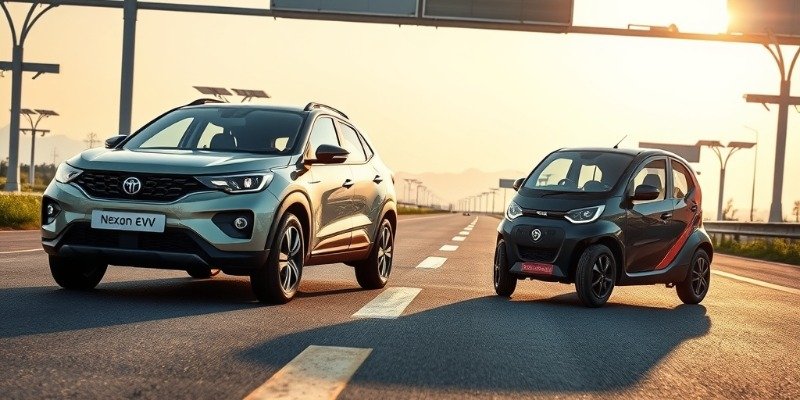
However, recent trends suggest India may be approaching its own electric vehicle tipping point. Industry analysts have noted that rising fuel prices are pushing more Indian consumers toward electric alternatives. In May 2026, India's electric passenger vehicle market delivered a record 26,000 units, marking an 80% increase compared to the same month the previous year. Tata Motors led the charge with 10,231 electric vehicle sales, followed by Mahindra with 6,133 units.
Government Strategy and Policy Direction
India's approach to electric vehicle adoption differs significantly from strategies used in the United States. Rather than relying heavily on consumer incentives, India's National Institution for Transforming India (NITI Aayog) recommends moving toward mandates and regulations that progressively require manufacturers to produce electric vehicles.
The government's strategy includes focusing on specific vehicle segments that offer the greatest environmental benefits, such as buses, trucks, and three-wheelers, which together account for a disproportionate share of emissions despite representing a small portion of the total vehicle fleet. This targeted approach aims to maximize impact while building momentum for broader adoption.
Indian policymakers are also emphasizing service-based incentives rather than simply subsidizing vehicle purchases. This approach ensures that financial support goes to vehicles that are actually being used rather than sitting idle, addressing concerns about subsidy effectiveness seen in other markets.
Lessons for India's Electric Vehicle Manufacturers
The downturn in GM's electric vehicle sales offers important lessons for India's growing electric vehicle industry. Companies that have maintained strong local manufacturing presence and offered vehicles at accessible price points — like Tata Motors with its EV lineup — appear better positioned to weather market volatility.
India's electric two-wheeler market has shown particular strength, with domestic manufacturers successfully adapting electric vehicle technology to local needs and usage patterns. The government's Production Linked Incentive (PLI) scheme for electric two-wheelers has helped build this competitive advantage, something Indian four-wheeler manufacturers are now working to replicate.
Recent policy discussions have highlighted the importance of reducing import duties on electric vehicle components and establishing battery manufacturing facilities within India. These measures aim to make domestic electric vehicles more price-competitive while reducing dependence on foreign supply chains that have experienced disruptions.
Charging Infrastructure Development
One key factor supporting India's electric vehicle growth has been strategic investment in charging infrastructure. Unlike the scattered approach seen in some international markets, India's strategy focuses on developing concentrated charging networks in high-demand corridors and metropolitan areas.
Government initiatives include identifying priority highway corridors for charging station development and coordinating with power distribution companies to ensure adequate electricity supply. The plan involves setting up nodal agencies in each state to streamline approvals and facilitate faster deployment of charging infrastructure.
This coordinated approach addresses many of the challenges that have affected charging infrastructure viability in other markets, where low utilization rates and inconsistent power supply have made many stations unprofitable.
Moving Forward with Realistic Expectations
As India continues its push toward electric mobility, the experiences of American automakers serve as a reminder that electric vehicle adoption is not a linear process. Market conditions, regulatory changes, and consumer preferences can all shift rapidly, affecting even the most well-established brands.
India's strategy of combining targeted mandates with service-based incentives and strategic infrastructure development appears well-suited to navigate these challenges. By focusing on vehicle segments with the highest potential for impact and building capabilities within the domestic manufacturing ecosystem, India aims to avoid the boom-and-bust cycle that has characterized electric vehicle markets elsewhere.
The country's unique vehicle composition — dominated by two-wheelers and three-wheelers rather than cars — provides both opportunities and constraints for electric vehicle adoption. Success will depend on maintaining momentum through policy consistency, continued investment in manufacturing capabilities, and sustained consumer education about the benefits of electric mobility.
GM's electric vehicle challenges in the United States should not be seen as a reflection on the global viability of electric vehicles, but rather as a market correction following initial enthusiasm and changing policy environments. For India, the focus remains on steady, sustainable growth that builds long-term consumer confidence and establishes a solid foundation for the country's electric vehicle ambitions.
Conclusion
While General Motors faces significant challenges in the U.S. electric vehicle market, India's electric vehicle sector continues to show promise. The key takeaway for Indian policymakers and manufacturers is the importance of maintaining policy consistency, focusing on affordable vehicle options suited to local conditions, and building robust supporting infrastructure. By learning from both the successes and setbacks in international markets, India can chart its own path toward sustainable electric mobility that serves the needs of its diverse population and varied transportation landscape.
The contrast between GM's decline and India's growth underscores the importance of context-specific approaches to electric vehicle adoption. What works in one market may not translate directly to another, and India's emphasis on two-wheelers, three-wheelers, and commercial vehicles reflects the realities of its transportation ecosystem.