The Indian passenger vehicle market continued its strong run through the third quarter of 2026, backed by steady consumer demand and an expanding range of new models. Total sales for the quarter crossed 3.88 lakh units, representing a healthy 14.5 percent jump compared to the same period last year. This growth reflects a combination of factors, including rising disposable incomes, improved supply chain conditions, and a clear shift in buyer preferences toward larger, more practical vehicles.
SUVs remained the star performers, accounting for over 56 percent of all passenger vehicle sales. Their share grew from 52 percent in the previous year, underlining how Indian buyers are increasingly favoring higher ground clearance and spacious interiors. Alongside conventional SUVs, strong hybrid and electric vehicles also saw notable demand. Strong hybrid sales rose 32 percent year-on-year, while electric vehicles captured 9.3 percent of total passenger vehicle sales in the first quarter of the financial year. This signals a growing acceptance of cleaner, more efficient mobility solutions among mainstream car buyers.
Maruti Suzuki kept its position as the largest carmaker in the country, supported by consistent performances from models like the Brezza and Swift. Tata Motors and Mahindra & Mahindra also strengthened their presence, particularly in the SUV and EV categories. The market has become more competitive, with the top six manufacturers together holding over 90 percent of the market share. This concentration shows how established players continue to dominate, while smaller brands struggle to gain meaningful traction.
Among individual models, the Maruti Dzire emerged as the best-selling car of the quarter. It reclaimed the top spot after several years, helped by strong demand from taxi fleet operators and first-time buyers. The Dzire posted a 4.9 percent market share, maintaining its appeal despite increased competition. Close behind, the Tata Nexon held second place with combined sales of both its internal combustion and electric versions. The Nexon EV continued to lead in the electric car segment, supported by expanding charging infrastructure and government incentives.
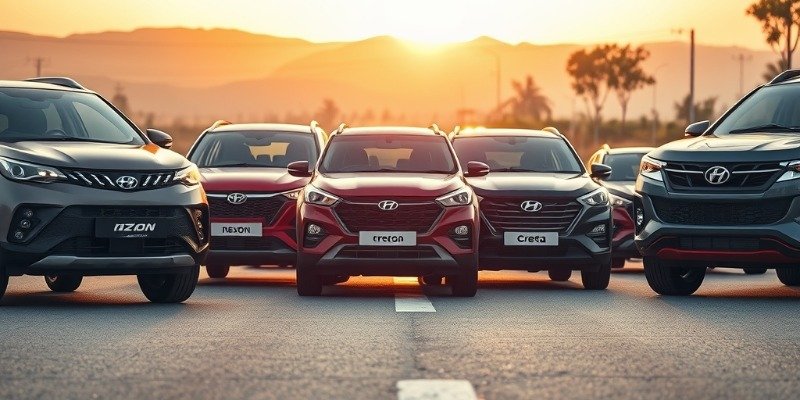
The Hyundai Creta retained its strong third-place position, benefiting from regular updates and a loyal customer base. Meanwhile, the Mahindra Scorpio-N continued to attract buyers looking for rugged capability, registering steady growth of 12.8 percent. The Maruti Swift, despite a modest 5.7 percent growth, remained a reliable choice in the premium hatchback space. Other notable mentions included the Maruti Brezza, which grew 14.1 percent, and the Tata Punch, which continues to punch above its weight in the micro SUV category.
Financially, the market remained buoyant thanks to accessible financing options. Car loan interest rates stayed largely stable, ranging between 8.75 percent and 9.95 percent annually across major lenders. Many institutions offered loan-to-value ratios as high as 90 percent for popular models, making car ownership more affordable. There was also a clear trend toward longer loan tenures, with seven and eight-year options gaining popularity, especially for premium SUVs and electric vehicles where upfront costs tend to be higher.
Looking ahead, the second quarter of the financial year promises to be eventful. Several new model launches are expected, particularly in the EV and hybrid segments. With consumer sentiment remaining positive and supply chain disruptions easing, the industry is well-positioned to sustain its momentum. However, rising input costs could pose a challenge if passed on to buyers through higher prices.
The Indian car market in Q3 2026 showcased resilience and adaptability. While SUVs dominate sales charts, the steady rise of electric and hybrid vehicles points to a transformative phase in mobility. Established brands are leveraging their strengths, but the door remains open for fresh entrants who can offer compelling value and innovation.
What drove the strong growth in Indian car sales during Q3 2026?
The 14.5 percent year-on-year growth in passenger vehicle sales was fueled by robust consumer demand, improved semiconductor supplies, and a wider range of appealing models. Buyers increasingly favored SUVs and hybrid vehicles, both of which posted strong gains. Additionally, attractive financing options with stable interest rates made car loans more accessible than ever.
Which car models were the top sellers in March 2026?
The top-selling models included the Maruti Dzire, which led the market after reclaiming the best-seller title. It was followed closely by the Tata Nexon, available in both petrol and electric variants. The Hyundai Creta, Maruti Brezza, and Mahindra Scorpio-N also ranked among the highest-selling vehicles during the month.
Why are SUVs dominating the Indian car market?
SUVs now account for more than 56 percent of total passenger vehicle sales, up from 52 percent the previous year. Their dominance stems from consumer preference for higher seating positions, greater practicality, and perceived safety. Additionally, manufacturers have expanded their SUV lineups across price points, making them accessible to a broader audience.
Is the adoption of electric vehicles increasing in India?
Yes, electric vehicle adoption is accelerating. EV penetration reached 9.3 percent of total passenger vehicle sales in the first quarter of FY27. Models like the Tata Nexon EV have played a key role in driving this trend, supported by government subsidies, expanding charging networks, and growing consumer awareness about environmental benefits.
What are current car loan interest rates and trends in India?
New car loan interest rates currently range between 8.75 percent and 9.95 percent per annum, remaining largely stable. Most lenders offer loan-to-value ratios of up to 90 percent for popular models. A growing number of borrowers are opting for longer tenures of seven to eight years, particularly to finance premium SUVs and electric vehicles, helping to lower monthly installment burdens.