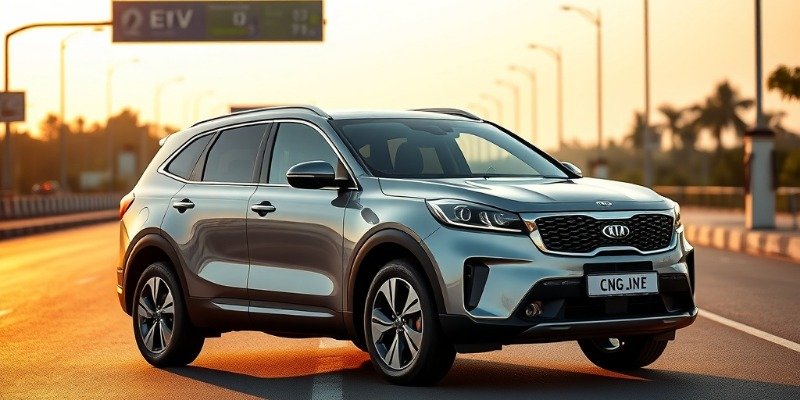
Kia India is not putting all its eggs in the electric basket. The Korean automaker has spelled out a clear multi-powertrain strategy that keeps petrol, diesel, strong hybrids, factory-fitted CNG and battery-electric vehicles in play. The idea is simple: give buyers a choice that matches their wallet, driving habits and access to charging infrastructure. At the centre of this approach sits the newly launched Sorento, Kia's first strong-hybrid model for the country, which arrives alongside a 2.2-litre diesel option and a price band of Rs 27.99 lakh to Rs 40.39 lakh.
Sorento leads the hybrid charge
The three-row Sorento marks Kia's entry into the strong-hybrid segment in India. The 1.6-litre turbo-petrol unit pairs a combustion engine with an electric motor to deliver better fuel efficiency, especially in city traffic. Kia expects roughly 60 per cent of Sorento buyers to pick the hybrid variant and has set an internal sales target of 4,000 units per month. If achieved, that would translate to nearly 29,000 hybrid Sorentos a year, turning the technology from a niche showcase into a volume contributor. The diesel version remains on the menu for customers who cover long highway distances and value the torque and range of a traditional compression-ignition engine.
Eight electrified models by 2030
Kia has confirmed it wants eight out of ten models in its Indian line-up to be electrified by 2030. The count already includes four battery-electric vehicles on sale today: the EV6, EV9, Carens Clavis EV and the recently introduced Syros EV. On the hybrid side, strong-hybrid versions of the Seltos, Sorento and Carnival are under development. The Sorento will be locally assembled and is expected to become the first model to use a locally produced hybrid powertrain, with engine localisation slated for 2027. The Carnival hybrid has also been confirmed, while a final decision on a fully electric Seltos — similar to the Hyundai Creta Electric — is still being studied.
Factory-fitted CNG in the works
Until now, Kia has relied on dealer-installed retrofit kits for the Carens to address CNG demand. That is changing. Engineering work on factory-fitted CNG systems is described as strong work in progress, with the Carens and Carens Clavis named as early candidates. The company is also evaluating CNG for other segments, including compact SUVs such as the Sonet, where running-cost sensitivity is high. A factory-installed setup avoids the complexity and warranty concerns of aftermarket kits and can lower fuel bills without the high-voltage hardware of a hybrid or EV.
Why strong hybrids stay out of Sonet and Seltos for now
Managing director and CEO Gwang Gu Lee has ruled out taking the strong-hybrid system down to the Sonet and Seltos in the near term. The reason is affordability. The additional cost of a hybrid powertrain is easier to absorb in a premium SUV like the Sorento than in a compact model where price sensitivity is far greater. Lee's stance is that hybrids should be commercially viable without special tax incentives, while EVs continue to need government support to drive adoption.
Flex-fuel and capacity plans
Beyond hybrids and CNG, Kia is also preparing a flex-fuel version of the Syros, broadening the alternative-fuel portfolio further. On the manufacturing front, the Anantapur plant in Andhra Pradesh has an annual capacity of around 4.31 lakh units. The immediate goal is to hit 100 per cent utilisation, and the company is evaluating additional capacity, though no final expansion decision has been taken. The Sorento's hybrid volume target alone would consume a meaningful slice of that capacity, underlining the need for efficient production planning.
Retail reach and festive momentum
Kia's network now spans more than 900 customer touchpoints across 400-plus cities, with a growing focus on upcountry and emerging markets. The company reported strong performance in the first eight months of FY27 and is banking on festive-season demand to maintain momentum. The multi-powertrain line-up is designed to capture buyers across the spectrum — urban households with home charging who can go electric, highway drivers who prefer diesel, city users without charging access who see value in a strong hybrid, and price-sensitive customers who can benefit from CNG.
Kia's approach is becoming more segmented by design. EVs remain central to the long-term vision, hybrids enter where customers can absorb the premium, CNG serves the more cost-conscious segments, and diesel continues where long-distance efficiency matters. By refusing to force a single powertrain into every use case, Kia is betting that flexibility will win in a market as diverse as India.
FAQs
What is Kia India's target for electrified models by 2030?
Kia India aims to have eight out of ten models in its line-up electrified by 2030. This includes both battery-electric vehicles and strong-hybrid models.
Which Kia models will get strong-hybrid powertrains in India?
Strong-hybrid versions are confirmed for the Sorento, Seltos and Carnival. The Sorento is the first to launch with the technology.
Is Kia planning factory-fitted CNG models?
Yes. Factory-fitted CNG systems are under development for the Carens and Carens Clavis, and the company is evaluating the technology for other models such as the Sonet.
Will the Sonet and Seltos get strong-hybrid variants soon?
No. Kia's CEO has ruled out strong-hybrid versions of the Sonet and Seltos for now due to affordability concerns in those segments.
What is the sales target for the Sorento hybrid?
Kia expects around 60 per cent of Sorento sales to come from the hybrid variant and has set an internal target of 4,000 units per month.