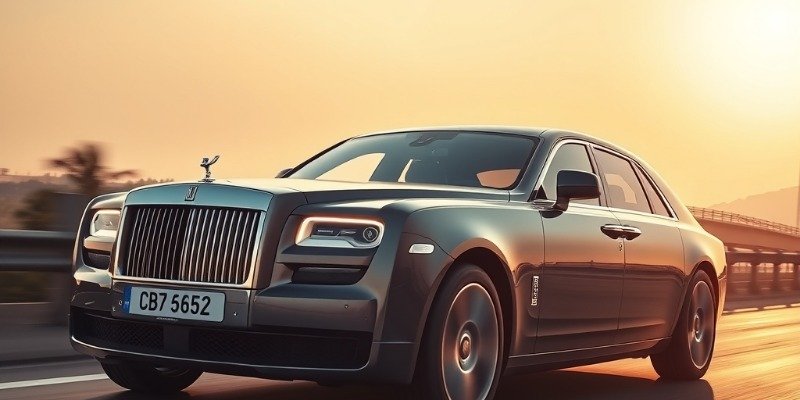
India's Directorate General of Foreign Trade has opened applications for the 2027 tariff-rate quota under the India-UK Comprehensive Economic and Trade Agreement. The notice, issued on 6 November 2026, allows eligible businesses to import up to 27,250 UK-origin vehicles at preferential customs duties during calendar year 2027. This marks the first full-year quota allocation since the agreement entered into force on 15 July 2026.
What the 2027 TRQ Covers
The total quota of 27,250 units is split between passenger cars and goods vehicles. Passenger cars get 24,500 units divided into three engine-capacity bands. The smallest-engine category — petrol up to 1,500 cc and diesel up to 1,500 cc — receives 6,000 units. The mid-range band — petrol 1,500 cc to 3,000 cc and diesel 1,500 cc to 2,500 cc — also receives 6,000 units. The largest-engine band — petrol above 3,000 cc and diesel above 2,500 cc — gets the biggest share at 12,500 units. A separate allocation of 2,750 units is reserved for goods transport vehicles imported as completely built units, excluding electric and hydrogen-powered models.
All vehicles must be new, completely built units that have not been registered anywhere before importation. The quota applies only to vehicles that qualify as UK-origin under the CETA Rules of Origin.
How Customs Duties Change Under CETA
The agreement does not eliminate import duties. Instead, it phases in lower in-quota rates over time. For internal combustion engine passenger cars, the base customs duty before CETA was 110 percent for large engines (above 3,000 cc petrol or 2,500 cc diesel) and 66 percent for medium and small engines. In Year 1 (2026), the in-quota duty drops to 30 percent for large engines and 50 percent for medium and small engines. From Year 5 onwards, both categories reach a floor of 10 percent.
For premium electric, hybrid, and hydrogen passenger vehicles with a CIF value above £40,000, preferential treatment begins only in Year 6. The in-quota duty starts at 50 percent for vehicles valued between £40,000 and £80,000 and 40 percent for those above £80,000, declining to 10 percent from Year 10 onwards. There is no out-of-quota concession for these electrified vehicles.
Goods vehicles see the base 44 percent duty fall to 37 percent in Year 1 and reach 8.8 percent from Year 5. Out-of-quota imports of goods vehicles continue to receive partial concessions, with duties declining to 22 percent by Year 10.
Which Brands Stand to Benefit
The agreement primarily benefits manufacturers that build premium vehicles in the United Kingdom. Rolls-Royce (Phantom, Cullinan), Bentley (Bentayga, Flying Spur, Continental GT), Aston Martin (DB12, DBX), and McLaren (750S, Artura) are listed as having clear potential eligibility because their relevant models are manufactured in the UK.
Jaguar Land Rover and MINI receive a conditional rating. A UK-built Range Rover may qualify, but a Defender made in Slovakia would not. Similarly, MINI Cooper models built in the UK could benefit, while those made elsewhere would not. Manufacturing location matters more than brand ownership. Vehicles assembled in India by Jaguar Land Rover are outside the scope of these import concessions.
Rules of Origin and Quota Mechanics
To claim the preferential rate, importers must prove the vehicle meets CETA Rules of Origin, hold a valid Certificate of Origin issued by UK authorities, and secure a TRQ authorisation from DGFT before customs clearance. The annual quota operates on a first-come basis within the allocation framework. Once the category quota is exhausted, further imports face the higher out-of-quota duty (typically the MFN rate). For electrified vehicles, no out-of-quota concession exists at all.
The 2027 quota is significantly larger than the partial-year 2026 allocation, which was capped at 4,200 units and saw only 642 cars approved across six companies. The full calendar-year window gives importers better planning certainty.
Application Process and Deadlines
Eligible applicants include UK original equipment manufacturers, authorised dealers, and authorised channel partners. Each must submit a pre-purchase agreement from the UK manufacturer specifying the supply quantity for 2027. Applications opened on 6 November 2026 and close on 21 November 2026. The quota period runs from 1 January to 31 December 2027. If total requests exceed the category quota, DGFT distributes the available quantity proportionally based on the pre-purchase agreements.
What This Means for Indian Buyers
The duty reductions can lower the landed cost of qualifying luxury and premium vehicles, potentially improving price competitiveness. However, the final retail price still depends on freight, insurance, currency rates, dealer margins, GST, state levies, and the commercial decisions of manufacturers and importers. Not every UK-made model will become significantly cheaper overnight. The quota limits volume, and only vehicles within the allocated numbers receive the preferential rate.
FAQs
Who can apply for the 2027 TRQ allocation?
UK vehicle manufacturers, their authorised dealers, and authorised channel partners can apply. Each applicant must provide a pre-purchase agreement from the UK manufacturer confirming the supply quantity for 2027.
What happens if the quota for a category is fully used?
Once the annual quota for a category is exhausted, additional imports can still enter India but will attract the higher out-of-quota customs duty. For electric, hybrid, and hydrogen vehicles, no out-of-quota concession is available at all.
Do all Jaguar Land Rover models qualify for the lower duty?
No. Only UK-built models that satisfy the CETA Rules of Origin qualify. A Range Rover manufactured in the UK may be eligible, but a Defender made in Slovakia would not. JLR vehicles assembled in India are not covered by these import concessions.
When do electric vehicles get preferential duty under CETA?
Preferential treatment for premium EVs, hybrids, and hydrogen vehicles starts in Year 6 of the agreement (2031 onwards) and applies only to vehicles with a CIF value above £40,000.
Is the 27,250 quota only for passenger cars?
No. The total includes 24,500 passenger cars across three engine-capacity bands and 2,750 goods vehicles (excluding electric and hydrogen goods vehicles).