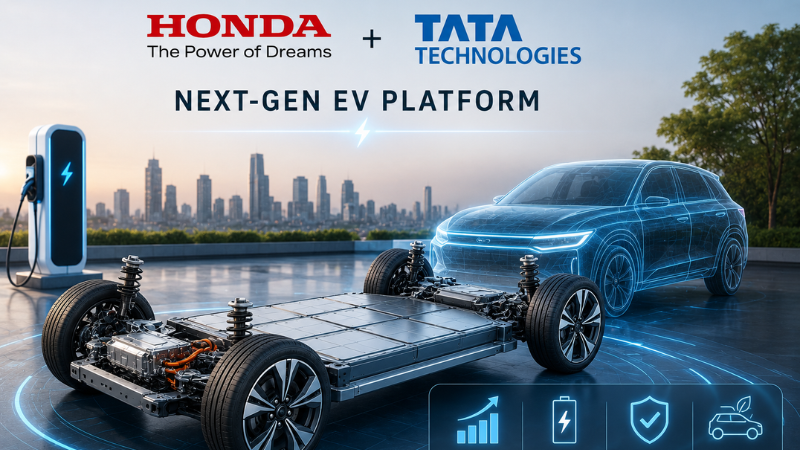
Honda ने future cars के development को लेकर एक ऐसा कदम उठाया है जो Indian automobile industry के लिए काफी important हो सकता है। Reports के मुताबिक Honda ने नई vehicle platform development programme के लिए Indian engineering company Tata Technologies को काम सौंपा है। यह platform सिर्फ EVs के लिए नहीं होगा, बल्कि conventional petrol, hybrid और battery-electric powertrains को support करने के लिए तैयार किया जा रहा है। हालांकि Honda और Tata Technologies ने इस reported programme की specific details publicly confirm नहीं की हैं।
इस खबर को समझने के लिए एक बात clear होना जरूरी है: यह Tata Motors और Honda की EV partnership नहीं है। Tata Technologies एक अलग Tata Group company है, जो automotive engineering और product development services देती है। इसलिए इसका मतलब यह नहीं है कि Honda की future cars सीधे Tata Motors के platforms पर बनेंगी।
Honda और Tata Technologies के बीच क्या हुआ है?
उपलब्ध reports के अनुसार Honda ने एक नए vehicle programme की end-to-end platform development के लिए Tata Technologies को चुना है। Sources के मुताबिक यह platform कई future models के लिए इस्तेमाल हो सकता है और इसमें ICE, hybrid तथा EV powertrains को accommodate करने की क्षमता होगी। किन markets में इन Tata-engineered Honda vehicles को बेचा जाएगा, इसकी जानकारी अभी सामने नहीं आई है।
Tata Technologies ने regulatory clarification में यह भी कहा कि Japanese OEM से vehicle development programme मिलना उसके पहले से disclosed business activities का हिस्सा है। कंपनी ने customer confidentiality के कारण client की पहचान पर सीधे comment नहीं किया। Media reports ने इस Japanese OEM को Honda से जोड़ा है।
यह सिर्फ EV platform की कहानी क्यों नहीं है?
इस development को केवल “Honda EV platform” कहना थोड़ा misleading होगा। Reports में जिस architecture की बात है, वह multiple powertrain types को support करने के लिए तैयार किया जा रहा है। इसका मतलब future model petrol engine के साथ आ सकता है, hybrid version में भी इस्तेमाल हो सकता है और इसी basic engineering architecture से EV भी develop किया जा सकता है।
आज के Indian market में यह approach काफी practical है। EV demand बढ़ रही है, लेकिन हर customer अभी battery-electric car लेने के लिए तैयार नहीं है। कुछ buyers petrol पसंद करते हैं, जबकि कई लोग hybrid को middle ground मानते हैं। एक flexible platform Honda को market demand के अनुसार अलग-अलग powertrain options develop करने में मदद कर सकता है।
Honda के लिए cost reduction इतना important क्यों है?
Honda ने 2026 में अपनी global automobile strategy को फिर से adjust किया है। कंपनी ने कहा है कि वह development efficiency और cost structure को improve करने पर ज्यादा focus करेगी। Honda ने “Triple Half” approach के तहत development cost, development timeframe और development workload को 2025 के level की तुलना में आधा करने का लक्ष्य बताया है।
ऐसे में platform development का कुछ हिस्सा external engineering partner को देना business perspective से logical हो सकता है। अगर एक common architecture कई models को underpin कर सकता है, तो engineering resources दोबारा इस्तेमाल किए जा सकते हैं। इससे अलग-अलग models के लिए development work को तेजी से scale करना संभव हो सकता है।
India के लिए इसका सबसे बड़ा फायदा क्या हो सकता है?
भारत में automotive engineering talent और product-development capability तेजी से बढ़ी है। Tata Technologies का automotive engineering में लंबे समय से काम है और Tata Group के अनुसार कंपनी ने complete vehicle engineering और electric vehicle development में भी capabilities बनाई हैं।
Honda के लिए India-based engineering support का मतलब केवल कम development cost नहीं हो सकता। इससे global projects में Indian engineers की भूमिका भी बढ़ सकती है। अगर future platform में India-specific requirements को शुरुआत से ध्यान में रखा जाता है, तो आने वाली Honda cars भारतीय roads, customer preferences और price-sensitive market के लिए बेहतर तरीके से तैयार की जा सकती हैं।
Future Honda EVs में क्या बदल सकता है?
अभी यह कहना जल्दबाजी होगी कि Tata Technologies द्वारा engineered platform पर कौन-सी Honda EV आएगी। Model names, battery capacity, range, motor output और pricing जैसी कोई confirmed information इस programme के लिए उपलब्ध नहीं है। इसलिए किसी specific future Honda EV की range या launch date को अभी fact की तरह पेश करना सही नहीं होगा।
फिर भी platform-level development से कुछ संभावित benefits समझे जा सकते हैं। Modular architecture होने पर अलग wheelbase, body style और battery configuration के साथ अलग models develop करना आसान हो सकता है। इससे एक ही engineering foundation से SUV, sedan या दूसरे body types तैयार करने की flexibility बढ़ सकती है, हालांकि Honda ने इस specific programme के body styles की पुष्टि नहीं की है।
Honda की अपनी EV technology strategy भी जारी है
यह development Honda की अपनी EV technology efforts को replace करता हुआ नहीं दिखता। Honda ने अपनी global technology roadmap में dedicated EV hardware और software architecture पर काम जारी रखने की बात कही है। कंपनी की Honda e: Architecture battery सहित EV hardware और next-generation electronic architecture को combine करती है तथा OTA updates जैसी connected capabilities को support करने के लिए बनाई गई है।
Honda ने 2025 में यह भी बताया था कि उसकी next-generation vehicle technologies में modular architecture, lightweight construction और improved body rigidity जैसे areas पर focus है। कंपनी ने future EV platform में भी कुछ technologies apply करने की योजना बताई थी। ([Honda Global][7])
Tata Technologies की EV expertise क्यों काम आ सकती है?
Tata Technologies का automotive engineering experience इस reported programme का एक important हिस्सा है। Tata Group के अनुसार कंपनी ने electric vehicle modular platform development और complete vehicle engineering जैसी capabilities विकसित की हैं। कंपनी ने ICE vehicles को EV में convert करने के लिए engineering processes पर भी काम किया है।
EV development में सिर्फ battery और motor लगाना पर्याप्त नहीं होता। Vehicle packaging, thermal management, electronics, software, body structure, crash requirements, charging system और manufacturing processes सभी को साथ में design करना पड़ता है। Experienced engineering partner की मदद से automaker development workload को manage कर सकता है।
Indian roads पर future EVs के लिए इसका क्या मतलब है?
भारत में EV platform को global market से थोड़ा अलग तरीके से तैयार करना पड़ सकता है। यहां गर्मी, monsoon, खराब road surfaces, speed breakers, heavy traffic और अलग-अलग charging conditions जैसी practical challenges हैं। Future Honda EVs अगर India-focused engineering inputs के साथ develop होती हैं, तो ground clearance, suspension tuning, battery protection और thermal performance जैसे areas ज्यादा important हो सकते हैं।
City users के लिए efficient regenerative braking, smooth low-speed response और compact packaging useful होंगे। वहीं highway users के लिए high-speed efficiency, battery cooling और fast-charging capability ज्यादा important होगी। हालांकि इस reported Honda-Tata Technologies platform के लिए इनमें से किसी specific feature की official confirmation अभी नहीं हुई है।
क्या इससे Honda EVs की कीमत कम हो सकती है?
यह सबसे interesting सवालों में से एक है, लेकिन इसका सीधा जवाब अभी नहीं दिया जा सकता। Platform development cost कम होने से overall product economics बेहतर हो सकती है, लेकिन final car की price battery cost, localisation, production volume, features, taxes और positioning जैसे कई factors पर depend करेगी।
फिर भी common platform strategy का long-term benefit scale के साथ बढ़ सकता है। अगर एक architecture से कई models बनाए जाते हैं, तो components और engineering processes में commonality बढ़ सकती है। इससे production और development efficiency improve होने की संभावना रहती है।
Honda के Indian EV plans से इसका connection
Honda ने May 2026 की business briefing में India को अपने future growth के priority markets में शामिल किया। कंपनी ने कहा कि वह Indian customer preferences और market characteristics के अनुसार specifications redefine करेगी और 2028 से India-focused models introduce करने की योजना पर काम कर रही है।
इसलिए Tata Technologies वाला development India के लिए खास interest रखता है। अभी यह confirmed नहीं है कि reported platform का कोई specific model भारत में आएगा, लेकिन Honda का India-focused product strategy पर काम करना यह दिखाता है कि Indian market future product planning में important बना हुआ है।
Honda vs Tata Motors: एक जरूरी clarification
इस खबर के बाद कई लोगों को लग सकता है कि Honda और Tata Motors मिलकर EVs बनाएंगे। ऐसा मानना सही नहीं होगा। Tata Technologies और Tata Motors अलग companies हैं। Reported arrangement engineering और vehicle platform development से जुड़ा है, न कि Honda और Tata Motors के बीच किसी confirmed passenger-car joint venture से।
इस distinction को समझना इसलिए जरूरी है क्योंकि Tata Motors खुद अपनी EV architectures पर काम कर रही है। उदाहरण के लिए Tata.ev की Punch EV जैसी cars acti.ev platform पर आधारित हैं, जबकि Avinya programme की technology strategy में 2026 में बदलाव किया गया है।
आगे Indian EV buyers को क्या देखने को मिल सकता है?
अभी इस development का सबसे बड़ा takeaway यह है कि आने वाली electric cars केवल battery और range के बारे में नहीं होंगी। Automakers अब development cost, software, common platforms और flexible powertrain architectures पर भी ज्यादा focus कर रहे हैं। Honda का Tata Technologies के साथ reported platform programme इसी broader industry shift का example है।
अगर यह architecture successfully multiple models तक पहुंचता है, तो Honda को future में EV और hybrid cars को तेजी से develop करने में मदद मिल सकती है। Indian buyers के लिए इसका फायदा बेहतर product variety, ज्यादा technology और potentially improved cost competitiveness के रूप में सामने आ सकता है। फिलहाल सबसे जरूरी बात यह है कि इस platform से जुड़ी battery, range, pricing और model-specific details को official Honda announcements आने तक अनुमान के रूप में ही देखा जाए।