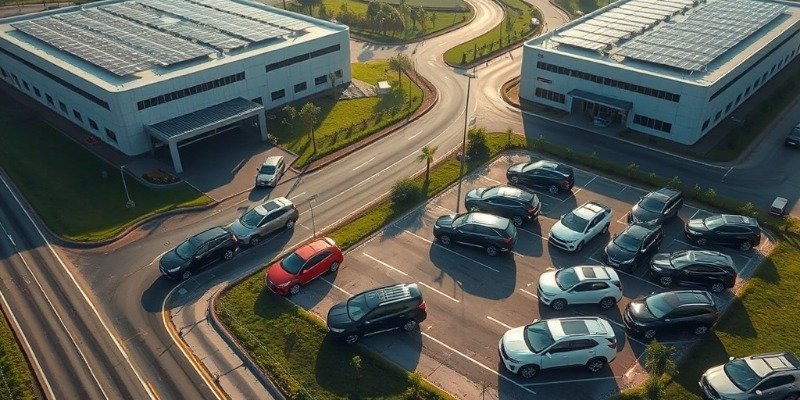
Kia India has made its biggest commitment yet to the Indian market. At the CII Partnership Summit in Visakhapatnam on November 12, 2026, Managing Director and CEO Gwanggu Lee announced a fresh $2 billion investment for a new manufacturing facility in Andhra Pradesh. The move will create around 12,000 jobs and lift the company's combined annual production capacity from 4.3 lakh to 6.3 lakh vehicles.
This is not an expansion of the existing Anantapur plant. It is a completely new facility that will sit alongside the current operation. The announcement signals that Kia is preparing for a much broader product offensive across petrol, diesel, CNG, hybrid and electric powertrains.
The Existing Footprint Is Already Strong
Kia's first India plant in Anantapur was commissioned in 2017, just 14 months after the initial agreement. It currently has an installed capacity of 4.3 lakh units per year. In financial year 2026, the plant produced 3.17 lakh vehicles. Of these, 2.89 lakh were sold domestically and 27,953 were exported.
The Anantapur facility has also become a significant export hub. Kia has shipped more than 4.1 lakh vehicles and kits to nearly 100 countries from this location. The company reached one million vehicles produced in four years and two million in seven years, making it one of the fastest ramp-ups by any global automaker in India.
Why A Second Plant Matters
Adding a second plant does more than just increase volume. It gives Kia manufacturing redundancy, flexibility to run different body styles and powertrains on separate lines, and the ability to scale exports without squeezing domestic supply. For buyers, this reduces the risk of long waiting periods on popular models like the Seltos, Sonet, Carens and the newly launched Sorento.
The new capacity also supports Kia's stated goal of offering 10 models in India by 2030. The current lineup spans the Sonet, Seltos, Syros, Carens, Carnival and Sorento. Future additions will include new SUVs across segments, with eight of the ten planned models expected to be electrified in some form.
The EV And Hybrid Dimension
While the official announcement focused on capacity and jobs, the expansion carries clear implications for electric vehicle production. In July 2026, Andhra Pradesh's IT and Electronics Minister Nara Lokesh met Kia Corporation leadership in Seoul. He proposed an integrated EV and hybrid manufacturing ecosystem, including a CKD assembly and export hub near Visakhapatnam port, EV component manufacturing for battery systems and charging electronics, and a powertrain testing and homologation centre. Kia said it would examine the proposals with senior management.
Separately, Kia has outlined an aggressive electrification strategy for India. The company targets 4.1 lakh annual sales and 7.6 percent market share by 2030. Electric car registrations in India jumped 90 percent year-on-year between March and July 2026, though EVs remain a small fraction of total sales. Kia's multi-powertrain approach means it will not bet on a single technology. Instead, it will offer petrol, diesel, strong hybrid, factory-fitted CNG and battery-electric options to match diverse buyer needs.
What This Means For Your Next Purchase
If you are planning to buy a Kia in the next two to three years, the new plant brings several practical benefits. First, higher total capacity means better availability and shorter waiting times on high-demand models. Second, a broader model pipeline means more choices across body styles and price points. Third, the multi-powertrain strategy means you can choose the fuel type that suits your running costs and driving pattern without switching brands.
The investment also strengthens the local supplier ecosystem. Three South Korean auto component manufacturers have already signed MoUs with the Andhra Pradesh government to set up operations supporting Kia's expansion. This deepens localisation, which over time can help keep pricing competitive and spare parts availability high.
Timeline And Uncertainties
Kia has not disclosed a timeline for when the new plant will break ground or become operational. The $2 billion commitment is a strategic roadmap rather than an immediate capacity change. Until the company announces a commissioning schedule, the current 4.3 lakh capacity at Anantapur remains the constraint.
The announcement was made at a government-backed investor summit, and a formal memorandum of understanding may follow. Land acquisition, environmental clearances and construction typically take 18 to 24 months for a greenfield automotive plant in India. If work begins in 2027, the earliest realistic start of production would be late 2028 or 2029.
The Bigger Picture For Indian Manufacturing
Kia's decision to double down on Andhra Pradesh reinforces the state's emergence as a serious automotive hub. The project joins other major commitments in the state from companies like Cognizant, LG and Google. For the Hyundai Motor Group, of which Kia is a part, the expansion aligns with a broader intent to use India as a global export platform. The Anantapur plant already ships to nearly 100 countries. The new facility will amplify that role.
For the Indian auto industry, the investment is a vote of confidence in long-term domestic demand growth despite near-term headwinds. It also shows that global automakers still see value in building new capacity in India rather than only exporting from existing bases elsewhere.
Kia's $2 billion bet is not just about making more cars. It is about building a flexible, future-ready manufacturing footprint that can serve an Indian market increasingly segmented by fuel type, body style and price point. For car buyers, that means more options, better availability and a brand that is visibly committed to staying and growing in India.
FAQs
How much is Kia investing in the new Andhra Pradesh plant?
Kia India has announced a $2 billion investment for a completely new manufacturing facility in Andhra Pradesh. This is separate from the existing Anantapur plant.
How many jobs will the new plant create?
The company estimates the new facility will create around 12,000 jobs, according to the announcement made by CEO Gwanggu Lee at the CII Partnership Summit.
What will Kia's total production capacity become?
Combined capacity across both plants will rise from the current 4.3 lakh units per year to 6.3 lakh units per year once the new facility is operational.
When will the new plant start production?
Kia has not disclosed a timeline for construction or commissioning. Greenfield automotive plants in India typically take 18 to 24 months to build after groundbreaking, so production is unlikely before late 2028 or 2029.
Will the new plant make electric vehicles?
The official announcement did not specify the product mix. However, Kia has discussed an integrated EV and hybrid manufacturing ecosystem with the Andhra Pradesh government, and eight of its ten planned models for 2030 are expected to be electrified.