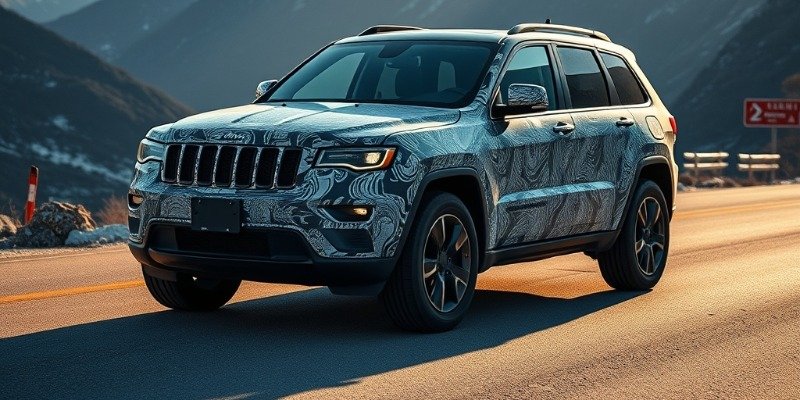
Jeep India is preparing to enter the highly competitive mid-size SUV segment with an all-new model that will directly challenge the Hyundai Creta, Tata Curvv, Maruti Suzuki Grand Vitara, and Toyota Urban Cruiser Hyryder. This upcoming vehicle represents a strategic shift for the American brand, which currently offers the Compass and Meridian in the country but lacks a product in the volume-heavy sub-20-lakh price bracket.
Platform and architecture
The new SUV will be underpinned by Stellantis' Common Modular Platform (CMP), which currently underpins the Citroen C3, C3 Aircross, and Basalt in India. However, Jeep engineers are modifying this front-wheel-drive architecture to accommodate a four-wheel-drive system. This adaptation is significant because it would make the Jeep offering unique in the segment where most rivals rely on front-wheel-drive layouts with optional all-wheel-drive systems that are not designed for serious off-road use. The platform modifications aim to retain Jeep's off-road credibility while keeping costs manageable through localisation.
Powertrain options
Two distinct powertrain paths are being evaluated. The internal combustion version is expected to use a 1.6-litre direct-injection turbo-petrol engine (codenamed EP5DT) that produces between 150 hp and 180 hp in global applications. The higher-output 180 hp variant could be offered in India to differentiate the model from segment rivals. Additionally, a fully electric version with four-wheel-drive capability is in development, aligning with Stellantis' global electrification roadmap. The EV variant would share its platform architecture with the ICE model but feature a bespoke battery and motor configuration.
Why the current Renegade is not coming
Jeep evaluated bringing the existing Renegade — its smallest global SUV — to India but decided against it. The current model would attract high import duties and localisation costs, pushing its price dangerously close to the larger and more premium Compass. This overlap would create cannibalisation rather than expansion. Instead, the India-specific model is being developed from the ground up for cost efficiency and segment relevance.
Positioning and pricing
The target price band is between Rs 15 lakh and Rs 20 lakh (ex-showroom), placing it squarely in the heart of the mid-size SUV segment. At this price point, it will compete with the Hyundai Creta, Kia Seltos, Tata Curvv, Maruti Suzuki Grand Vitara, Toyota Urban Cruiser Hyryder, Honda Elevate, and Volkswagen Taigun. Jeep aims to differentiate through genuine four-wheel-drive hardware, distinct design language, and a premium interior package that includes features such as a large touchscreen infotainment system, digital instrument cluster, advanced driver assistance systems (ADAS), and a 360-degree camera.
Global model with India focus
This SUV is being developed as a global product with planned launches in Brazil, Europe, and other emerging markets. The India version will feature high localisation levels to meet the aggressive price target. Jeep has also confirmed that the next-generation Compass — originally planned for India — has been shelved, making this new mid-size SUV the brand's volume driver for the foreseeable future.
Expected timeline
Industry sources indicate a launch window around 2027 to early 2028. The vehicle has been internally codenamed J1J and is currently in advanced development stages. Jeep's Indian R&D centre is heavily involved in platform adaptation and validation for local conditions.
Competitive landscape
The mid-size SUV segment is India's most fiercely contested space, with the Hyundai Creta consistently leading monthly sales charts. Jeep's entry adds a new dimension: a truly off-road-capable architecture in a segment dominated by soft-roaders. The Tata Curvv, with its coupe-SUV styling and EV-first approach, will be the closest conceptual rival. However, Jeep's brand equity around capability and heritage could attract buyers seeking more than urban aesthetics.
What this means for buyers
If you are in the market for a mid-size SUV and can wait until 2027-2028, this Jeep model promises a unique combination of genuine four-wheel-drive hardware, Stellantis' latest platform technology, and the brand's distinctive design language. The availability of both turbo-petrol and electric powertrains on the same architecture also offers future-proofing. However, buyers needing a vehicle sooner will find a well-established set of alternatives already on sale.
The upcoming Jeep mid-size SUV represents a calculated move by Stellantis to leverage shared architecture while delivering a product that carries authentic Jeep DNA. Its success will depend on execution — particularly pricing, localisation quality, and after-sales network readiness — but on paper, it fills a clear gap in both Jeep's portfolio and the Indian market.
FAQs
Will the new Jeep SUV be called Renegade in India?
The vehicle is based on the next-generation Renegade platform but may not carry the Renegade nameplate in India. Jeep has not confirmed the final model name for the Indian market.
What platform will the new Jeep SUV use?
It will use a modified version of Stellantis' CMP platform, which currently underpins the Citroen C3, C3 Aircross, and Basalt. The platform is being adapted to support four-wheel-drive hardware.
What engines will be offered?
A 1.6-litre direct-injection turbo-petrol engine (150 hp or 180 hp) is expected for the ICE version. A fully electric variant with four-wheel-drive is also in development.
When will the Jeep Creta rival launch in India?
The expected launch window is between 2027 and early 2028, based on current development timelines.
How will it differ from the Maruti Grand Vitara and Toyota Hyryder all-wheel-drive models?
While the Grand Vitara and Hyryder offer Suzuki's AllGrip Select system, the Jeep SUV is being engineered with more robust four-wheel-drive hardware aimed at genuine off-road capability, not just enhanced traction on slippery roads.