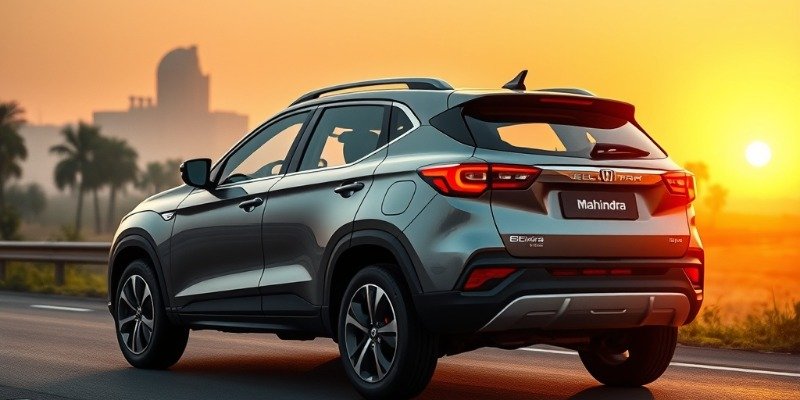
Mahindra Electric Automobile has hit a structural production ceiling of about 8,000 electric vehicles per month, but customer demand has already climbed to 10,000 to 11,000 units. R Velusamy, managing director of Mahindra Electric Automobile, confirmed to PTI that the company could sell another 2,000 to 3,000 EVs every month if supply constraints were removed. This gap defines the immediate challenge for India's second-largest electric car maker. The company plans to lift monthly EV capacity to 12,000 units by the end of the current financial year, with additional manufacturing capacity expected from the fourth quarter of FY27, which runs from January to March 2027. The question is whether this 50 percent capacity jump can be delivered on schedule and without diluting build quality.
The Demand Supply Gap In Numbers
Mahindra has been retailing over 8,000 electric SUVs in each of the past few months, a figure that aligns almost exactly with its stated capacity. Velusamy told the Economic Times that demand is now running at 10,000 to 11,000 units monthly. At the upper end, the unmet demand of 3,000 units represents a 37.5 percent shortfall on the current 8,000 base. Even the 12,000 target would only just cover the top of the current demand range, leaving little headroom if orders continue to climb. The company's Chakan facility in Pune currently produces just over 6,000 units monthly, with a plan to scale that to 8,000 by the end of FY27. The additional 4,000 units needed to reach 12,000 will come from new capacity additions that Rajesh Jejurikar, executive director and CEO of the Auto and Farm Sector, said are part of a broader plan adding 10,000 units of ICE capacity and 4,000 units of EV capacity as the year exits.
CAFE 3 Regulations Drive The 10,000 Monthly Target
The urgency behind Mahindra's EV push is not purely market driven. Corporate Average Fuel Efficiency (CAFE) 3 norms take effect from April 2027 and require a fleet average of 88.4 grams of CO2 per kilometre, down from 113 under CAFE 2. Mahindra's portfolio leans heavily on large SUVs such as the Scorpio, XUV700, Thar and Bolero, which push fleet emissions up. Each EV sold carries a super credit multiplier of three, making electric vehicles three times as effective at pulling the fleet average down. Jejurikar has stated the company needs 13 to 15 percent EV penetration by March 2027. With overall monthly volumes around 60,000 units, that translates to roughly 8,000 to 10,000 electric cars per month. In Q4 FY26, EVs made up 9.6 percent of Mahindra's SUV sales. By the last couple of months, that share had climbed to just over 11 percent, helped by stronger deliveries of the BE 6 and XEV 9e. Missing the CAFE 3 target would expose the company to hefty penalties, which makes the capacity ramp a compliance necessity as much as a sales opportunity.
Why Capacity Expansion Takes Time
Velusamy has said supply constraints should ease by the third quarter of FY27 (October to December 2026), with additional capacity arriving from the fourth quarter. However, building capacity is not simply a matter of adding assembly stations. An electric vehicle depends on battery packs, power electronics, motors, wiring, interiors and dozens of smaller assemblies arriving in sequence. Expanding the final assembly line accomplishes little if even one essential item continues to arrive too slowly. Mahindra's latest annual report identifies capacity increases, removing production bottlenecks and reducing supply chain risks as priorities. The company has previously encountered parts shortages affecting conventional SUVs, though those earlier problems cannot be assumed to explain the present electric SUV constraints. Bajaj Auto's joint managing director Rakesh Sharma has similarly tied his company's Chetak expansion to higher vendor output, confirming that suppliers are part of the bottleneck across the industry.
Quality Risks In A 50 Percent Output Jump
A 50 percent increase in monthly output, from 8,000 to 12,000 units, is a large step for a plant built around a given line rate. Quality validation, tooling changes and supplier ramp ups all run in sequence. Rushing any of these steps risks defects that could damage the brand at a critical moment. Mahindra's born electric range, including the BE 6, XEV 9e and XEV 9S, uses dedicated EV engineering rather than adapted ICE platforms. These models bring cabin space, performance and driving range advantages, but each has its own compromises in price, practicality and packaging. The XEV 9S has recently added volume, but whether the company can sustain the ramp without a more affordable electric option remains an open question. Velusamy described the situation as "a good problem to have," noting that unfilled demand beats unsold inventory. The risk lies in how long customers wait and whether quality holds as volumes climb.
Competitor Context Shows A Sector Wide Bottleneck
Mahindra is not alone. Tata Motors Passenger Vehicles says EV demand is nearly three times available supply, with EVs now representing about 25 percent of its passenger vehicle sales, up from 14 percent a year ago. Ather Energy reports losing 18,000 to 20,000 potential retail sales monthly due to production limits and plans to invest Rs 122 crore to add 225,000 units of annual capacity across Hosur and Chhatrapati Sambhajinagar, targeting about 1.14 million units by Q2 FY28. Bajaj Auto built 40,000 Chetak scooters in September against a plan of 60,000, a 33 percent miss blamed on capacity constraints, and aims to raise Chetak output to 80,000 monthly by Q4 FY27. Four major players across cars and scooters all pointing at the same bottleneck makes this a sector wide production story, not a single company hiccup.
What This Means For Buyers
For customers planning to buy a BE 6, XEV 9e or XEV 9S, the immediate issue is delivery timing. Availability can differ by variant, battery size, colour and dealership. A factory may have strong overall output while a particular configuration remains difficult to obtain. Mahindra has not supplied model wise waiting periods alongside the latest demand figures. Buyers should ask dealers for a written delivery estimate for the precise variant they want, along with clarity on allocation and booking conditions. The headline demand number is not a substitute for checking local stock. Written estimates become important if capacity additions slip, as the timeline for relief is currently pegged to the final quarter of FY27.
Mahindra's push to 12,000 EVs monthly by March 2027 is driven by both genuine market demand and regulatory necessity. The 3,000 unit gap is real and quantified by the company's own leadership. Closing it requires not just new assembly capacity but a synchronized supplier ramp across batteries, motors and electronics. The timeline leaves little margin for error. If the expansion lands on schedule and quality holds, Mahindra will meet its CAFE 3 target and capture more of the unmet demand. If either timeline or quality slips, the company risks penalties, customer frustration and brand damage at a pivotal moment in India's EV transition.
FAQs
What is Mahindra's current EV production capacity?
Mahindra Electric Automobile has a structural production capacity of about 8,000 electric vehicles per month as of the end of March 2026, according to the company's managing director R Velusamy.
How much unmet demand does Mahindra have for its electric SUVs?
Velusamy stated that monthly demand has climbed to 10,000 to 11,000 units, meaning the company could sell an additional 2,000 to 3,000 EVs monthly if supply constraints were removed.
When will Mahindra reach its 12,000 units per month target?
The company plans to reach 12,000 EVs per month by the end of the current financial year, which ends in March 2027. Additional manufacturing capacity is expected from the fourth quarter of FY27 (January to March 2027).
Why is the 10,000 monthly EV target critical for Mahindra?
CAFE 3 emissions norms take effect from April 2027 and require a fleet average of 88.4 grams of CO2 per kilometre. Mahindra needs 13 to 15 percent EV penetration across its roughly 60,000 monthly sales to comply, which translates to about 8,000 to 10,000 electric cars per month. Each EV carries a super credit multiplier of three, making them highly effective for fleet compliance.
Are other Indian EV makers facing similar supply constraints?
Yes. Tata Motors says EV demand is nearly three times supply. Ather Energy reports losing 18,000 to 20,000 potential retail sales monthly. Bajaj Auto built 40,000 Chetak scooters in September against a 60,000 plan, a 33 percent shortfall. All four major players cite capacity constraints as the primary bottleneck.