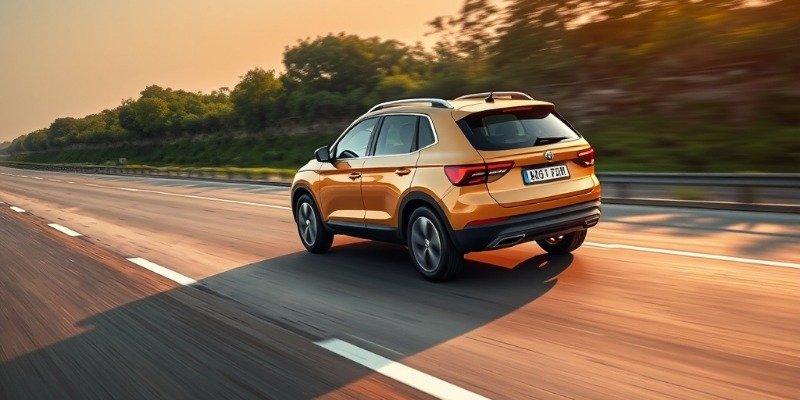
Skoda India is preparing a significant update for its sub-4 metre SUV, the Kylaq. The biggest change will be the introduction of an 8-speed automatic transmission, replacing the current 6-speed torque converter unit. This update was confirmed in recent company roadmap updates and promises to improve both highway cruising and city drivability.
The Kylaq currently uses a 1.0-litre TSI turbo-petrol engine paired with a 6-speed torque converter automatic. This combination delivers 114 bhp and 178 Nm of torque. The existing gearbox has been praised for its smooth shifts, effective masking of turbo lag, and suitability for Indian traffic conditions. It also offers a creep function for bumper-to-bumper driving and hill-hold assist for inclines.
Why an 8-Speed Automatic Matters
The move to an 8-speed automatic is aimed at two key areas. First, closer gear ratios will allow the engine to stay in its optimal power band more often. This means quicker responses during overtakes and smoother acceleration in city traffic. Second, a taller top gear will lower engine rpm at highway speeds. This reduces noise, vibration, and fuel consumption on long drives.
The current 6-speed unit already returns around 14 to 16 kmpl in real-world conditions. The new 8-speed is expected to improve this figure, especially on highways. For buyers who do monthly highway trips of 250 km or more, this change will make a noticeable difference in comfort and running costs.
Variant Availability and Pricing
Skoda has followed a unique strategy with the Kylaq by offering automatic transmission from the base variant upwards. Currently, the automatic is available in Signature AT and Signature Plus AT trims. The Signature AT is priced at around Rs 10.00 lakh ex-showroom, while the Signature Plus AT costs approximately Rs 11.34 lakh ex-showroom.
It is expected that the 8-speed automatic will follow the same democratised approach. This means buyers will not have to stretch to top-end variants to get the new gearbox. The price premium over the 6-speed automatic is likely to be modest, keeping the Kylaq competitive in the sub-4 metre SUV segment.
How It Compares with Rivals
The compact SUV segment is crowded with various automatic options. The Hyundai Venue and Kia Sonet use 7-speed dual-clutch transmissions (DCT) with their turbo engines. While DCTs are quick, they can feel hesitant at low speeds and in stop-and-go traffic. The Maruti Suzuki Fronx and Toyota Urban Cruiser Taisor offer a 6-speed torque converter with their 1.0-litre turbo engines, similar to the current Kylaq. The Mahindra XUV 3XO also gets a 6-speed torque converter on its 1.2-litre TGDi engine.
The Kylaq's upcoming 8-speed unit will give it a clear technical advantage. More gears mean better ratio spread, which translates to both stronger in-gear acceleration and lower highway rpm. For a segment where most rivals stop at 6 or 7 speeds, this is a meaningful differentiator.
Driving Dynamics and Daily Usability
The current Kylaq automatic is already rated highly for city driving. The torque converter ensures smooth take-offs, and the calibration avoids jerky shifts. The manual mode allows driver control when needed. With the 8-speed, these traits will be enhanced. The additional ratios will make low-speed crawling even smoother and high-speed cruising more relaxed.
Ground clearance of 189 mm and a wheelbase of 2,566 mm give the Kylaq a balanced ride. The suspension handles rough patches well, and the steering is light in traffic but weights up nicely on highways. The new gearbox will complement this chassis tune by keeping the engine calmer at triple-digit speeds.
Ownership Costs and Service
Skoda has worked to keep running costs in check. The company offers service packages that bring average maintenance down to around Rs 0.35 per kilometre. Extended warranty options are also available. The introduction of the 8-speed automatic is not expected to change this cost structure significantly, as torque converter units are generally robust and low-maintenance.
The Kylaq also comes with a 5-star Bharat NCAP safety rating, six airbags as standard, and a 446-litre boot. These features, combined with the new transmission, make a strong case for families looking for a safe and practical compact SUV.
Launch Timeline and What to Expect
According to industry updates from February 2026, Skoda is gearing up for the 8-speed automatic alongside a Sportline variant and a CNG powertrain. While an exact launch date has not been announced, the updates are expected to roll out in phases through 2026. Buyers planning a purchase in the near future should check with dealers for the latest availability.
The Kylaq has already crossed 50,000 units in production since its launch in December 2024. This volume gives Skoda the scale to introduce new powertrains without significant price hikes. The 8-speed automatic will likely be offered across the same variants as the current automatic, maintaining the brand's strategy of accessible premium features.
FAQs
What is the current automatic transmission in the Skoda Kylaq?
The Skoda Kylaq currently uses a 6-speed torque converter automatic transmission paired with the 1.0-litre TSI turbo-petrol engine.
When will the 8-speed automatic be available in the Kylaq?
Skoda has confirmed the 8-speed automatic as part of its 2026 roadmap updates, but an exact launch date has not been announced yet.
Will the 8-speed automatic be offered in lower variants?
Based on Skoda's current strategy, the automatic transmission is available from the Signature trim upwards. The 8-speed is expected to follow the same approach.
How does the Kylaq automatic compare to the Venue and Sonet DCT?
The Kylaq's torque converter automatic is smoother at low speeds and in stop-and-go traffic compared to the dual-clutch transmissions in the Venue and Sonet, which can feel hesitant in city conditions.
What fuel efficiency can be expected from the new 8-speed automatic?
The current 6-speed automatic returns 14 to 16 kmpl in real-world driving. The 8-speed is expected to improve highway fuel efficiency due to a taller top gear, though official figures are not yet available.