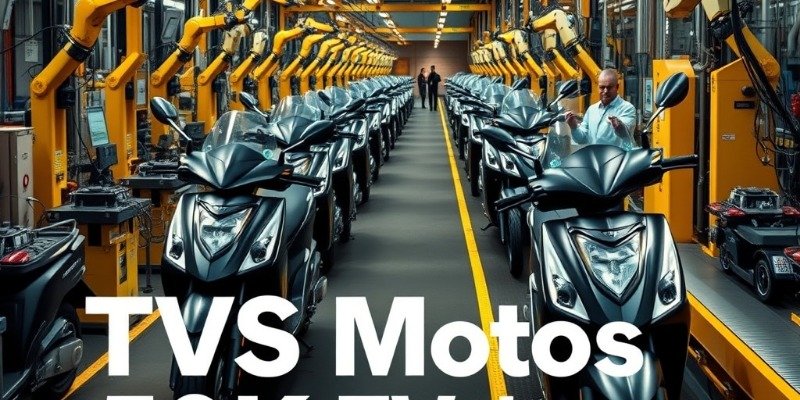
TVS Motor Company ne apni EV production capacity ko FY25 ke 30-32 हज़ार units/month se badha kar FY26 mein 40 हज़ार units/month kiya hai, aur ab current fiscal mein ~50 हज़ार units/month tak pohunchne ka target rakha hai। Ye aggressive ramp-up sirf ek volume game nahi hai — ye entire component ecosystem ko naye pressure aur naye opportunities ke saath reshape kar raha hai। Management ne FY27 ke liye ₹3,500 करोड़ ka capex announce kiya hai, jismein ₹2,000 करोड़ product development aur technology investments ke liye hain, aur ₹1,000 करोड़ se zyada manufacturing capacity expansion ke liye। Total installed capacity ko 1.5 मिलियन units badha kar ~8.3 मिलियन units tak le jana hai। Ye numbers sirf balance sheet pe achhe lagte hain, lekin ground level pe tier-2 aur tier-3 suppliers ke liye ek alag hi kahani likh rahe hain।
EV Volume Surge aur Supply Chain Pressure
FY26 mein TVS ke EV two-wheeler sales 33% YoY badh kar ~3.7 लाख units pohunch gaye, aur Q4 mein 51% YoY growth ke saath 1.15 लाख units ka record bana। EV business revenue FY26 mein ~₹5,000 करोड़ raha। Lekin management ne khud mana kiya hai ki near-term challenges hain: supply-chain disruptions, labor shortages with tier-2 component suppliers, aur delays in raw material availability। Rare earth magnet shortage ne bhi EV production ko constrain kiya tha, phir bhi 51% growth achieve hui। Ab 50 हज़ार units/month ka target matlab hai ki battery packs, motors, controllers, BMS, aur charging components ki demand exponentially badhegi। Component vendors jo abhi small batches mein supply karte the, unhe ab high-volume, consistent quality, aur just-in-time delivery ke liye apne processes upgrade karne padenge।
Capex Allocation ka Vendor Ecosystem pe Asar
₹2,000 करोड़ product development mein ja raha hai — iska matlab naye platforms, naye battery chemistries, naye motor designs, aur advanced electronics। Ye sab ke liye specialized vendors chahiye jo R&D phase se hi involve hon। TVS ne Hyundai ke saath electric three-wheeler platform ke liye joint development agreement bhi kiya hai, jisse component specifications aur testing standards aur strict honge। ₹1,000 करोड़+ capacity expansion ke liye matlab naye production lines, naye assembly shops, aur naye testing facilities। Iske liye automation equipment, conveyor systems, robotic welding, aur paint shop upgrades chahiye — ye sab capital goods suppliers ke liye bada opportunity hai। Lekin commodity inflation ~3-5% of revenue pe hai (steel, aluminum, crude derivatives, energy), aur company ne sirf ~35% offset kiya hai calibrated price hikes se। Baaki pressure vendors pe aayega cost absorption ke roop mein।
TVS Supply Chain Solutions ka Role
TVS Supply Chain Solutions (TVS SCS), jo TVS Group ka hi hissa hai aur 2023 mein listed hua, ye integrated logistics, warehousing, in-plant logistics, aur spare parts management handle karta hai। Unki global footprint (UK, Europe, US, Singapore, Australia) aur auto sector expertise (Multipart Holding, Rico Logistics acquisitions ke baad) TVS Motor ke component sourcing ko de-risk karne mein help karta hai। TVS SCS ne Mitsubishi Corporation se investment bhi liya hai, aur recent mein Sankyu Inc. (Japan) ke saath MoU sign kiya hai engineering services ke liye। Ye partnerships TVS Motor ke component vendors ko global best practices, advanced forecasting, aur vendor-managed inventory (VMI) models se connect kar sakte hain। Lekin tier-2 suppliers jo abhi manual processes pe hain, unhe digital integration ke liye invest karna padega।
Rare Earth Magnet aur Semiconductor Independence
Management ne clearly bola hai ki wo alternative technologies explore kar rahe hain taaki semiconductors aur rare-earth magnets pe dependence kam ho। Ye ek strategic shift hai — agar TVS apni motor designs ko rare-earth-free (jaise ferrite motors ya axial flux) pe shift karta hai, toh magnet suppliers ke liye risk hai, lekin naye material suppliers ke liye opportunity। Semiconductor ke liye bhi dual-sourcing, design standardization, aur maybe local fab partnerships (PLI scheme ke under) pe kaam chal raha hai। Component vendors jo apne products ko multiple platforms pe compatible bana sakte hain, wo preferred partners banenge।
Export Momentum aur Vendor Scale-up
International business FY26 mein record 1.58 मिलियन units (33% YoY) raha, revenue Q4 mein ₹3,000 करोड़। Africa, Asia, Latin America mein demand robust hai, lekin geopolitical tensions aur logistics disruptions ne lead times ~15% badha diye hain। TVS Ronin multiple export markets mein traction gain kar raha hai। Export orders ke liye component vendors ko higher quality standards (UNECE, E-mark), longer warranty support, aur export packaging norms follow karne padenge। Ye un vendors ko filter karega jo sirf domestic specs pe kaam karte the।
Festive Season Outlook aur Inventory Dynamics
Channel inventory typically 21-30 days range mein operate karta hai, aur management expect karta hai ki May-end/early June tak normalization ho jayegi as production improves। Festive season ke liye high single-digit growth expected hai, lekin below-normal rainfall aur high base (last year GST cut) mixed outlook dete hain। Vendor side se dekho toh inventory planning critical hai — overstocking se working capital block hoga, understocking se line stoppage। TVS Credit ka book ₹30,630 करोड़ ka hai, 2.4 करोड़ customers, jo dealer financing ko smooth karta hai — ye indirect tarike se vendor payments ko bhi stabilize karta hai।
TVS Motor ka 50 हज़ार units/month EV target sirf ek milestone nahi, ek structural shift hai jo component vendor landscape ko permanently change karega। Jo vendors scale, quality, digital integration, aur cost efficiency ke saath adapt karenge, wo next decade ke long-term partners banenge। Baaki consolidation ya exit ke pressure mein honge। Ye supply chain sprint TVS ke liye growth engine hai, lekin vendor ecosystem ke liye survival-of-the-fittest ka naya chapter।
FAQs
TVS Motor ki current EV production capacity kya hai aur target kya hai?
TVS Motor ki EV production capacity FY25 mein ~30-32 हज़ार units/month thi, FY26 mein ~40 हज़ार units/month hui, aur current fiscal (FY27) ke liye target ~50 हज़ार units/month ka hai।
FY27 capex kaise allocate kiya gaya hai?
₹3,500 करोड़ ke total capex mein ₹2,000 करोड़ product development aur technology investments ke liye, ₹1,000 करोड़ se zyada manufacturing capacity expansion ke liye, baaki other strategic projects ke liye।
Component vendors ke liye main challenges kya hain?
High-volume consistent quality delivery, just-in-time logistics, commodity cost absorption, digital integration with TVS SCS, aur stricter testing standards (specially Hyundai JV ke baad) main challenges hain।
TVS Supply Chain Solutions (TVS SCS) ka vendor ecosystem mein kya role hai?
TVS SCS integrated logistics, warehousing, in-plant logistics, spare parts management, aur global forwarding solutions provide karta hai. Unki global footprint aur auto expertise vendor de-risking, VMI models, aur advanced forecasting mein help karti hai।
Rare earth magnet shortage ka TVS ki strategy pe kya asar pada hai?
Management ne alternative technologies (rare-earth-free motors, semiconductor dual-sourcing) explore karna start kiya hai taaki future supply disruptions se bacha ja sake. Ye long-term mein vendor base ko diversify karega।