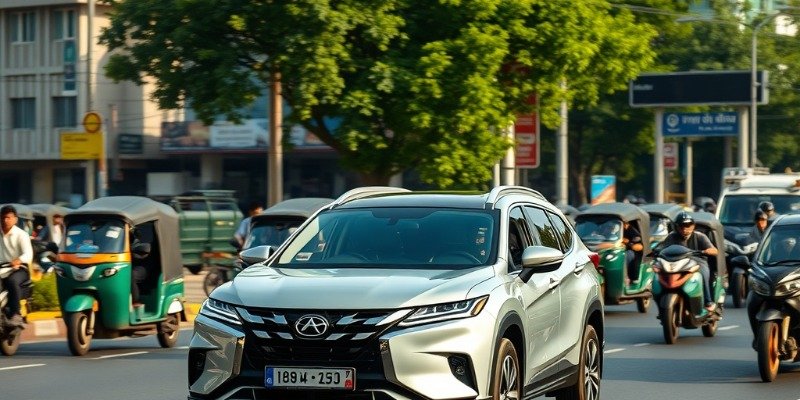
Rising fuel prices have made every kilometre count for Indian car buyers. While electric vehicles get a lot of attention, hybrid cars are quietly winning over more customers. In 2023, hybrid sales grew by 58 percent year on year according to SIAM data, and they are outperforming electric vehicles in several states where charging infrastructure is still limited. By the end of the financial year in March 2026, hybrid sales reached 3,62,866 units, a fourfold increase from just 98,010 units in 2019-20. This growth is not random. It comes from a clear need for a vehicle that saves fuel without asking the owner to change daily habits.
How Hybrids Work in Indian Conditions
Hybrid cars use a petrol engine and an electric motor together. An onboard computer decides which power source to use based on driving conditions. In stop and go city traffic, the electric motor takes over, saving fuel and cutting emissions. On highways, the petrol engine runs at its most efficient speed. Strong hybrids like the Toyota Innova HyCross and Maruti Suzuki Grand Vitara can deliver 25 to 30 kilometres per litre in city driving by maximising electric mode during frequent stops. Regenerative braking captures energy normally lost when braking and puts it back into the battery. This is especially useful in cities like Mumbai, Bengaluru, and Delhi where traffic jams are a daily reality. Mild hybrids assist the engine but cannot drive the car on electric power alone, while plug-in hybrids need external charging. For most Indian buyers, strong hybrids offer the best balance because they recharge themselves and need no plug.
Why Fuel Savings Matter More Now
Petrol and diesel prices have stayed high, and fuel costs can take up 15 to 20 percent of a middle class household's transport budget. A typical hybrid owner saves around ₹45,000 per year on fuel compared to a petrol variant, with the higher upfront cost paid back in three to four years. Real world mileage for strong hybrids falls between 14 and 22 kilometres per litre, which is still far better than most petrol cars in city conditions. For taxi operators and high mileage drivers, the savings are even larger. One Hyderabad based Uber driver reported spending ₹1.2 lakh less per year on fuel after switching to a hybrid. Maintenance costs are also lower. Regenerative braking reduces brake wear by up to 60 percent, and the petrol engine runs under less stress. Maruti Suzuki service data shows hybrid owners spend 35 percent less on maintenance over five years compared to petrol variants.
No Charging Infrastructure Needed
India has over 82,000 petrol pumps but only about 9,000 EV charging points. NITI Aayog estimates the country needs ₹1.5 lakh crore in investment to reach one charger per 20 electric vehicles by 2030. In tier two and three cities, and on highways like Delhi Jaipur, charging stations are almost non existent. Hybrids bypass this problem completely. Their batteries recharge while driving, so there is no range anxiety and no waiting at chargers. This makes them practical for intercity travel, areas with frequent power cuts, and apartment dwellers who cannot install home chargers. A survey in Bengaluru found that 68 percent of housing societies lack EV charging provisions due to space and electrical load constraints. Hybrids face none of these hurdles.
Government Policies and Market Trends
The FAME II scheme initially focused on electric vehicles, but states like Delhi, Gujarat, and Maharashtra now offer road tax exemptions or rebates of up to 50 percent for hybrids. The upcoming Corporate Average Fuel Economy norms are expected to mandate 30 percent better efficiency by 2027, which will push more manufacturers to adopt hybrid technology even in budget segments. Suzuki has invested ₹10,500 crore in Gujarat for local hybrid production, and Tata Motors and Mahindra are preparing India specific hybrids for launch by 2025. The Hyundai Creta Hybrid is expected to arrive under ₹18 lakh, which could bring strong hybrid technology to a much wider audience. However, the 43 percent GST on hybrid components compared to 5 percent for electric vehicles remains a barrier. Industry leaders have argued that reducing this to 18 percent could make hybrids only ₹1 to 1.5 lakh costlier than petrol models, a gap recoverable through fuel savings in 18 months.
Resale Value and Long Term Ownership
Used hybrids command 15 to 20 percent higher prices than petrol models in markets like Chennai and Bengaluru. Toyota hybrids regularly sell within 15 days at 85 percent of their original value after three years, while petrol models retain around 70 percent and electric vehicles just 60 percent due to battery life concerns. Indian taxi fleets have shown that hybrid powertrains can cross three lakh kilometres with minimal issues, a durability benchmark that most electric vehicles have not yet matched. For families planning to keep a car for five years or more, this strong resale value adds to the financial case.
The Road Ahead
Hybrids are no longer just a bridge to an all electric future. They are becoming a permanent solution for Indian conditions where 70 percent of electricity still comes from coal and reliable charging remains a metro privilege. Local innovations like Tata's hybrid AMT gearbox for Indian driving styles, Mahindra's cost effective hybrid system for the Bolero, and Ashok Leyland's evaporative battery cooling for extreme summers show that manufacturers are adapting the technology for India. Flex fuel hybrids and CNG hybrid combinations are also in development. With supportive policies, hybrids could capture 35 percent of the Indian car market by 2030, creating two lakh new jobs in local manufacturing and cutting oil imports by ₹45,000 crore annually.
FAQs
What are the main types of hybrid cars available in India?
There are three main types. Mild hybrids use a small electric motor to assist the petrol engine but cannot drive on electric power alone. Strong hybrids have a larger motor and battery that can power the car independently at low speeds or in traffic. Plug-in hybrids have even larger batteries that can be charged externally for longer electric only driving, but they still need charging infrastructure.
How much fuel can I save with a hybrid car in city driving?
Strong hybrids can reduce fuel consumption by up to 40 percent in stop and go traffic compared to petrol cars. Real world mileage typically ranges from 14 to 22 kilometres per litre depending on the model and driving conditions, while ARAI claimed figures are higher at 22 to 28 kilometres per litre.
Do hybrid cars need external charging?
Strong hybrids and mild hybrids do not need external charging. Their batteries recharge automatically through regenerative braking and the petrol engine while driving. Only plug-in hybrids require a charging point.
Which are the top selling hybrid cars in India right now?
The Toyota Innova HyCross is the top selling hybrid, followed by the Toyota Hyryder and Maruti Suzuki Grand Vitara. These strong hybrids are popular for their proven reliability and fuel efficiency in Indian conditions.
Are hybrid cars more expensive to maintain than petrol cars?
No. Hybrids generally have lower maintenance costs. Regenerative braking reduces brake pad wear by up to 60 percent, and the petrol engine operates under less stress. Service data shows hybrid owners spend about 35 percent less on maintenance over five years compared to petrol variants.