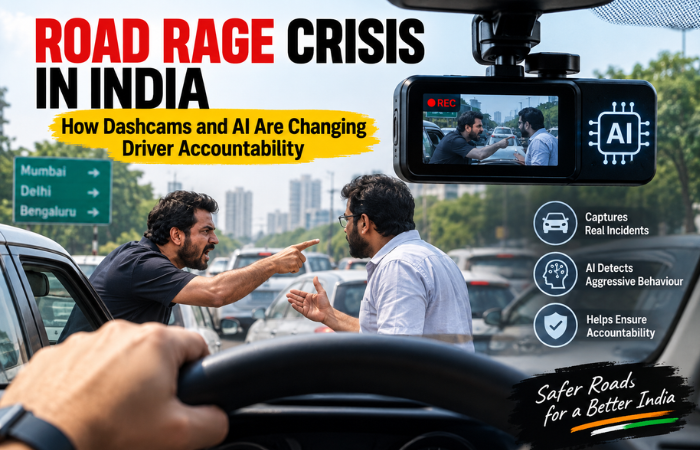
India's roads are witnessing a disturbing rise in violent confrontations. In September 2026 a widely shared video showed a car chasing and hitting a female biker in Gurugram. The driver was later arrested on charges including attempted murder. Earlier that year a Toyota Fortuner driver in Hassan, Karnataka, rammed a group of young men who had asked him to slow down, killing one and injuring three. In Dehradun an argument between two SUVs escalated into a chase and gunfire that took the life of a retired army brigadier who was simply out for a morning walk. These cases are not isolated. Government data shows 485 people died every day in road crashes in 2024. The number of vehicles is growing far faster than the road network, and SUVs now make up 56 percent of car sales. Experts say the size and height of these vehicles give some drivers a sense of power and impunity.
The psychology behind the wheel
Psychiatrist Ravi Prakash explains that sitting inside a large, sturdy vehicle makes a driver feel both powerful and protected. A routine lane change by another motorist can be taken as a personal insult. This "personalization" triggers anger that moves from honking and gestures to a desire to punish. Road safety expert Prince Singhal calls it a behavioral issue. The vehicle becomes a beast in the driver's hands, and the mindset decides the outcome. High bonnets and raised bumpers also increase the risk of fatal head and chest injuries for pedestrians, cyclists, and two-wheeler riders. Sociologist Dipankar Gupta points out that the root cause is weak enforcement. When rules are ignored without consequences, road discipline breaks down like an undisciplined child throwing a tantrum. The problem is not limited to SUV drivers; motorcyclists also engage in road rage.
Cameras everywhere but prevention lags
Deepanshu Gupta, cofounder of CrashFree India, notes that the anger is not new. What has changed is that everyone now has a camera. Dashcams, helmet cameras, and mobile phones capture incidents that would have gone unrecorded. Yet recording is not the same as preventing. Drivers know the odds of real consequences remain low. Without strict enforcement, aggressive driving becomes normalized culture. Indian law does not define road rage as a specific offense, leaving police to choose between minor rash driving charges and serious ones like attempted murder. There is little in between. The duty of care falls heavily on those driving larger vehicles in confrontations with vulnerable road users.
From passive recording to active safety
Modern dashcams have moved far beyond simple video loops. Commercial fleet operators now use AI-powered systems that combine a road-facing camera, a driver-facing camera, GPS, and real-time analytics. These devices detect fatigue, phone use, seatbelt violations, and distraction inside the cab while also monitoring forward collision risk, lane departure, and tailgating outside. When the AI spots a danger it issues an in-cab voice alert within about two seconds. The warning can speak in seven Indian languages including Hindi, Tamil, and Marathi. This immediate feedback gives the driver a chance to self-correct before a lapse becomes a crash. Event clips are tagged by severity and uploaded over 4G, so a control room learns of a serious incident in minutes rather than days.
Measurable impact on fleets
Deployments across Indian transporters show consistent results. Fleets using the full detect-alert-coach loop report up to 90 percent fewer accidents. Repeat violations drop by 40 percent as coaching replaces punishment. Incident response becomes three times faster. Manual video review falls by 60 percent because AI ranks only the events that matter. The same platform also cuts fuel waste from harsh acceleration and braking, reduces cargo theft with load-facing cameras, and settles delivery disputes through geofenced validation. Insurance renewals become stronger with tamper-resistant footage archives. For a mid-size fleet of 500 trucks the hardware and subscription cost is a predictable operating line, while a single serious crash can trigger write-offs, fatality claims, premium hikes, and lost contracts running into lakhs.
Winning driver trust
Technology fails if drivers see it as surveillance. Successful rollouts frame the camera as protection first. They show real clips where footage exonerated a driver from false blame. The private in-cab alert leads the experience, not the manager's report. Drivers see their own transparent safety scores and understand what moves them. Coaching happens over actual video of near-misses on familiar corridors. Safe drivers are recognized with rewards and preferred routes. When events fall and scores rise, drivers buy in and defend the program. This cultural shift is as important as the hardware.
Compliance and the road ahead
India's AIS-140 standard mandates tracking and safety devices for many commercial vehicles. Video telematics platforms that align with this framework simplify audits and retain footage for 90 days in a tamper-resistant archive. The United Nations Decade of Action for Road Safety aims to halve road deaths by 2030. Electronic enforcement, black-spot rectification, and stricter vehicle norms are accelerating. Fleets that adopt video telematics now build a data foundation that compounds. Every month of scored trips and coached behavior sharpens the next month's risk predictions and strengthens the next insurance conversation. Waiting means adopting later under regulatory pressure without years of accumulated data.
FAQs
What is the main cause of rising road rage in India?
Weak enforcement of traffic rules allows aggressive driving to become normal culture. The growing number of large SUVs gives some drivers a sense of power and impunity. Psychological factors like personalization turn minor incidents into confrontations.
How do AI dashcams differ from ordinary dashcams?
An ordinary dashcam only records video and overwrites it when full. An AI dashcam detects fatigue, distraction, and collision risk in real time, issues voice alerts within seconds, and uploads tagged event clips with GPS context for immediate review and coaching.
Can dashcams prevent accidents or only record them?
AI dashcams with driver monitoring and ADAS intervene before a crash. In-cab alerts warn a drowsy or distracted driver in the critical seconds when self-correction is still possible. Coaching over time changes habits and reduces repeat violations.
What does video telematics cost for an Indian fleet?
Connected truck cameras range from roughly 8,000 to 25,000 rupees per unit depending on channels and AI depth. A recurring software and connectivity subscription of a few hundred rupees per vehicle per month covers AI, dashboards, alerts, and cloud storage. Total cost of ownership should be compared over three years against the cost of crashes already being absorbed.
How do fleets stop drivers from resisting or disabling cameras?
Frame the system as protection, not punishment. Lead with the private in-cab alert that helps the driver self-correct. Show transparent scores and coach with real footage. Recognize safe drivers publicly. When drivers see events falling and scores rising, they trust the system and keep it active.