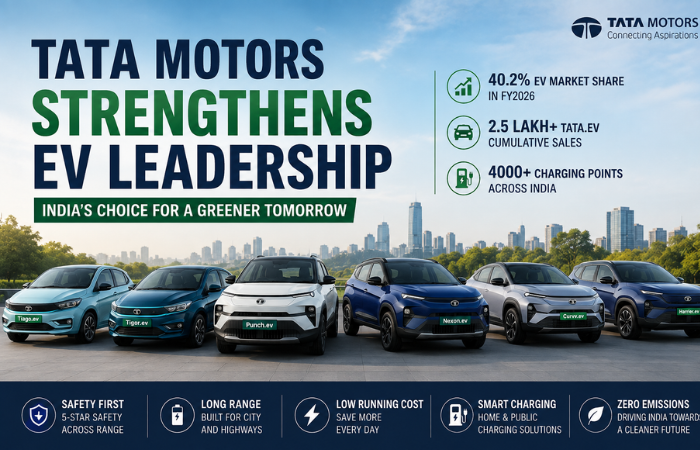
India का electric car market तेजी से बदल रहा है और इस बदलाव में Tata Motors की भूमिका अभी भी काफी मजबूत है। बढ़ती competition, नए electric SUVs और लगातार बेहतर होती EV technology के बीच Tata Motors ने अपनी electric passenger vehicle leadership को बनाए रखा है। 2026 में कंपनी के लिए सबसे बड़ा advantage उसका diversified EV portfolio है, जिसमें hatchback से लेकर compact SUV और बड़े electric SUV तक अलग-अलग options मौजूद हैं।
VAHAN registration data के आधार पर FY2026-27 की पहली तिमाही में Tata.ev की electric passenger vehicle market share 39% रही, जो एक साल पहले की 36.1% share से ज्यादा थी। यह आंकड़ा बताता है कि competition बढ़ने के बावजूद Tata Motors ने अपनी position को मजबूत किया है।
Tata Motors की EV leadership कितनी मजबूत है?
Tata Motors की electric car journey को अब केवल एक या दो models की सफलता से नहीं देखा जा सकता। कंपनी के पास अलग-अलग price points और body styles में EVs का portfolio है। Tata Motors की corporate presentation के अनुसार FY2026 में Tata.ev का VAHAN EV market share 40.2% रहा और cumulative electric vehicle sales 2.5 lakh units से ज्यादा हो चुकी थीं।
इस leadership की सबसे बड़ी वजह product variety है। Tata.ev portfolio में Tiago.ev, Tigor.ev, Punch.ev, Nexon.ev, Curvv.ev और Harrier.ev जैसे models शामिल हैं। इससे buyers को अपने budget, family size और driving requirements के हिसाब से electric car चुनने के ज्यादा विकल्प मिलते हैं।
Portfolio की variety Tata को क्या फायदा देती है?
Indian car market काफी diverse है। हर buyer को बड़ी SUV नहीं चाहिए और हर customer premium EV के लिए ज्यादा budget खर्च नहीं करना चाहता। इसी वजह से Tata Motors का multi-segment EV strategy महत्वपूर्ण हो जाता है।
शहर में daily commute करने वाले buyers के लिए compact EV ज्यादा practical हो सकती है। वहीं family users के लिए Punch.ev या Nexon.ev जैसे SUV-style models ज्यादा suitable हो सकते हैं। बड़े परिवार या premium SUV की तलाश करने वाले buyers के लिए Harrier.ev जैसे options Tata के portfolio को और broad बनाते हैं।
यह strategy company को सिर्फ एक segment पर निर्भर रहने से बचाती है। अगर किसी एक category में competition बढ़ता है, तो दूसरे segments में मौजूद products business को support कर सकते हैं।
New competition के बावजूद Tata क्यों मजबूत है?
Electric car market अब पहले जैसा नहीं रहा। Mahindra, MG, Hyundai और दूसरे manufacturers ने भी EV segment में अपनी presence बढ़ाई है। नए models आने से customers के पास पहले से ज्यादा choices हैं। इसका सीधा फायदा buyers को मिलता है क्योंकि brands को pricing, technology, range, design और after-sales experience पर ज्यादा ध्यान देना पड़ता है।
इसके बावजूद Tata.ev की market share में Q1 FY2027 के दौरान बढ़ोतरी हुई। Business Standard की रिपोर्ट के अनुसार Tata.ev की share 39% तक पहुंची, जबकि पिछले साल इसी अवधि में यह 36.1% थी।
इससे यह संकेत मिलता है कि केवल नए competitors का आना Tata Motors की demand को कमजोर करने के लिए पर्याप्त नहीं रहा। Company का established EV ecosystem, existing customer base और broad model range अभी भी महत्वपूर्ण advantage हैं।
Indian city driving में Tata EVs का practical फायदा
Electric cars का सबसे natural use case city driving है। रोजाना office commute, school runs, shopping और short-distance family travel के लिए EV काफी convenient हो सकती है। Frequent stop-and-go traffic में electric motor की instant response driving को smooth बनाती है। साथ ही petrol या diesel engine की तरह engine oil और कई conventional engine components की जरूरत नहीं होती।
हालांकि EV खरीदने से पहले charging arrangement को जरूर समझना चाहिए। अगर घर पर dedicated parking और charging की सुविधा है, तो daily usage काफी आसान हो सकता है। Tata Motors अपने EV ecosystem में charging solutions और public charging support पर भी काम कर रही है। कंपनी की EV platform जानकारी के अनुसार उसके ecosystem में 4,000 से अधिक society chargers का उल्लेख किया गया है।
Highway driving और range को लेकर क्या ध्यान रखें?
Electric car खरीदते समय range सबसे ज्यादा चर्चा में रहने वाले factors में से एक है। लेकिन official range को real-world range के बराबर नहीं मानना चाहिए। Manufacturer द्वारा बताई गई range standardized testing conditions में प्राप्त होती है, जबकि actual driving में कई factors range को प्रभावित करते हैं।
Highway पर लगातार तेज speed, ज्यादा load, तेज acceleration और road gradient energy consumption बढ़ा सकते हैं। इसी तरह शहर में heavy traffic और frequent acceleration भी efficiency को प्रभावित कर सकते हैं। इसलिए Tata EV खरीदने वाले customer को अपनी typical driving pattern के आधार पर range requirement तय करनी चाहिए।
अगर आपका daily commute सीमित है और घर पर charging उपलब्ध है, तो केवल maximum claimed range के पीछे जाने की जरूरत नहीं हो सकती। दूसरी ओर, अगर आपका काम highway travel से जुड़ा है, तो battery capacity, charging network और long-distance charging time को ज्यादा महत्व देना समझदारी होगी।
Battery और charging: buyer को क्या देखना चाहिए?
EV की battery सिर्फ range तय करने वाला component नहीं है। Battery size के साथ charging capability, thermal management, warranty और software management भी ownership experience को प्रभावित करते हैं। अलग-अलग Tata EV models में battery specifications और charging capabilities अलग हो सकती हैं, इसलिए buyer को किसी एक model की specification को दूसरे model पर लागू नहीं करना चाहिए।
Home charging अधिकांश private EV owners के लिए सबसे convenient solution हो सकता है। रात में vehicle charge करने से अगली सुबह daily commute के लिए car तैयार मिल सकती है। Public fast charging उन users के लिए ज्यादा उपयोगी हो सकती है जो लंबी journeys करते हैं। लेकिन charging speed और compatibility model-specific होती है, इसलिए खरीदने से पहले official specifications check करना जरूरी है।
EV ownership cost में क्या फर्क पड़ता है?
Electric car की running cost petrol या diesel car की तुलना में कम हो सकती है, लेकिन actual saving usage और electricity tariff पर निर्भर करती है। Tata Motors अपनी EV website पर कुछ models के लिए लगभग ₹1 प्रति kilometre running-cost claim करती है, लेकिन इसे हर vehicle और हर user के लिए fixed cost नहीं माना जाना चाहिए। Actual cost electricity rate, charging losses, driving conditions और vehicle efficiency पर depend करेगी।
Maintenance के मामले में EV में conventional engine-related servicing कम हो सकती है। Engine oil, spark plugs और exhaust system जैसे components मौजूद नहीं होते। लेकिन tyres, brakes, suspension, air-conditioning system, electronics और battery-related systems की regular inspection फिर भी जरूरी है। Warranty terms और battery coverage को खरीदने से पहले ध्यान से पढ़ना चाहिए।
Indian weather और road conditions का असर
भारत में EV ownership का experience मौसम और road conditions के हिसाब से बदल सकता है। गर्मियों में high temperature battery performance और charging behaviour को प्रभावित कर सकता है। Monsoon में पानी भरी roads और खराब surfaces से गुजरते समय manufacturer की water-wading और charging safety guidelines follow करनी चाहिए।
खराब roads पर tyre और suspension components पर ज्यादा stress पड़ सकता है, इसलिए EV को केवल battery और range के नजरिए से देखना सही नहीं है। Long-term ownership में build quality, service support और local workshop availability भी महत्वपूर्ण हैं।
Tata EV buyers के लिए कौन-से options relevant हैं?
Tata का EV portfolio अलग-अलग buyer requirements को cover करने की कोशिश करता है। Tiago.ev जैसे compact option से लेकर Punch.ev और Nexon.ev जैसे SUV-style models तक, customers को कई choices मिलती हैं। Curvv.ev coupe-SUV design पसंद करने वाले buyers को target करती है, जबकि Harrier.ev बड़े electric SUV segment में Tata की presence को मजबूत करती है। Tata.ev की current portfolio listing में ये models शामिल हैं।
किस model को चुनना चाहिए, यह केवल price या range पर depend नहीं करता। City usage, family requirements, parking space, charging facility, highway travel और desired features को साथ में देखना चाहिए।
क्या Tata Motors की EV leadership आगे भी कायम रह सकती है?
2026 में Tata Motors की सबसे बड़ी strength उसका existing EV scale और broad portfolio है। कंपनी ने FY2026 में 40.2% EV VAHAN market share और 2.5 lakh से ज्यादा cumulative Tata.ev sales report की थीं। वहीं FY2027 की पहली तिमाही में market share बढ़कर 39% रही, जो बताती है कि competition बढ़ने के बावजूद company की position मजबूत बनी हुई है।
आने वाले समय में competition और तेज होने की संभावना है। Buyers अब सिर्फ electric होने की वजह से car खरीदने के लिए तैयार नहीं हैं। उन्हें अच्छा range, reliable charging, strong safety, comfortable interiors, useful technology और dependable after-sales support भी चाहिए। इसलिए Tata Motors के लिए अगला challenge अपनी leadership को बनाए रखने के साथ-साथ EV ownership experience को लगातार बेहतर करना होगा।
Indian buyers के लिए अच्छी बात यह है कि EV market अब ज्यादा mature हो रहा है। अगर आप Tata EV खरीदने की planning कर रहे हैं, तो केवल claimed range या introductory price पर फैसला न लें। अपनी daily driving distance, home charging setup, highway requirements, service network और long-term ownership cost को compare करें। सही usage pattern वाले buyer के लिए Tata का growing EV portfolio आज पहले की तुलना में कहीं ज्यादा practical choice बन चुका है।